Your Name on the Deed Doesn’t Mean Your Name Is on the Loan — and the Difference Matters More Than You Think
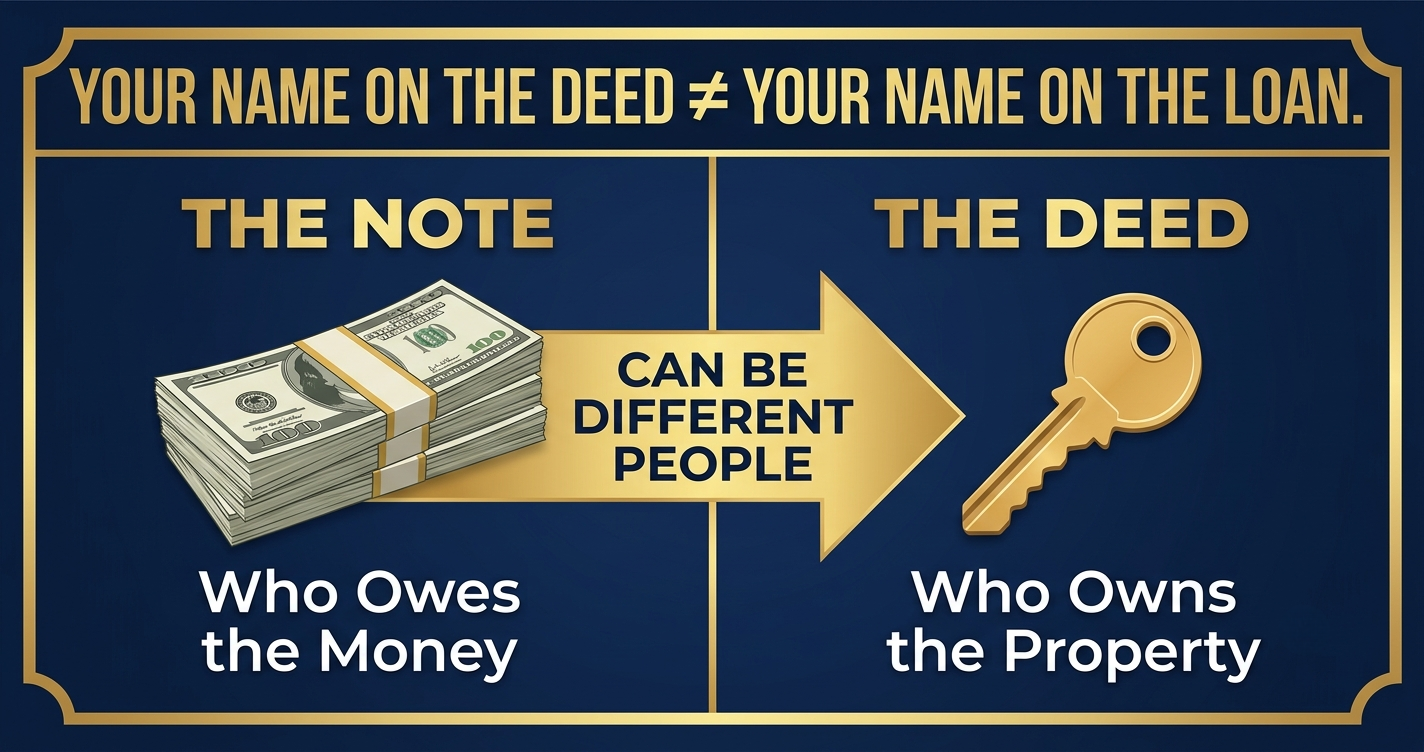
The promissory note (who owes the money) and the mortgage deed of trust (who pledged the property) are two separate documents. In Florida, they can involve different people — and this distinction affects married couples, estate planning, HELOCs, and who the bank can pursue if the loan goes unpaid. Here’s the clear explanation nobody gave you at closing.
📞 Mortgage Clarity: 407-603-1664 Free ConsultationEvery day I work with homebuyers and current homeowners who believe their “mortgage” is one thing — the loan. And technically, they’re right in the casual sense. But in a legal sense, what most people call “the mortgage” is actually two documents working together: the promissory note (the actual loan obligation) and the mortgage instrument or deed of trust (the security pledge).
Understanding the difference between these documents isn’t just a legal technicality — it determines who can be held personally liable for the debt, what happens to the property if the borrower dies, how a HELOC or second lien can be strategically structured, and why Florida’s homestead law requires both spouses to sign the mortgage even when only one spouse is on the loan.
The Promissory Note vs. The Mortgage Instrument: What Each One Is
- What it is: Your personal written promise to repay the loan
- Who signs: The borrower(s) — those being held personally responsible for repayment
- Personal liability: Yes — lender can pursue note signers personally for deficiency if property sale doesn’t cover the debt
- Recorded: No — the note is not recorded in public records
- Credit impact: Only note signers appear on the loan — only their credit is pulled and reported
- Estate implications: Note obligation can survive the borrower’s death and pass to their estate
- What it is: The security pledge that puts the property up as collateral for the note
- Who signs: All parties who have an ownership interest in the property
- Personal liability: No — the mortgage instrument encumbers the property, not the person
- Recorded: Yes — recorded in public records, becomes a lien on the title
- Credit impact: Non-borrower spouses who sign the mortgage instrument are not responsible for the debt and it does not appear on their credit
- Florida homestead rule: Both spouses must sign the mortgage instrument on a homestead even if only one is the note borrower
Why This Distinction Matters in Real Life — 4 Scenarios
If one spouse has a 740 credit score and the other has 620, putting only the stronger-credit spouse on the note may produce a significantly better interest rate. The other spouse signs the mortgage instrument as required by Florida homestead law — but has no personal loan liability and the loan doesn’t appear on their credit report. Both remain on the deed as co-owners.
A couple wants a HELOC for home improvements. One spouse has a high debt-to-income ratio from business obligations. The HELOC can be structured with only the qualifying spouse as the note borrower — qualifying solely on their income and credit. Both spouses sign the mortgage instrument (security interest) as required by Florida homestead law. Only the note borrower has personal liability; the HELOC appears only on their credit report.
When a home is held in a revocable living trust, the trustee signs the mortgage instrument on behalf of the trust — but the trust beneficiaries (the actual owners) may not personally appear on the note. The lender may also require the individual trustee to personally sign the note. This structure is common in estate planning and requires careful coordination between the mortgage lender, title company, and the estate planning attorney.
When a note borrower dies, their personal obligation on the promissory note becomes an obligation of their estate. The surviving spouse who is on the deed but not on the note may be able to keep the property (assuming the lender allows the loan to continue without calling it due) — but this depends on the loan’s due-on-sale clause, state law, and lender policy. Garn-St. Germain Act protections apply in some scenarios.
Florida Homestead Law and the Two-Signature Rule
| Situation | Who Signs the Note | Who Signs the Mortgage Instrument | Credit/Liability Impact |
|---|---|---|---|
| Standard married couple purchase (both qualify) | Both spouses | Both spouses | Loan reports on both credit profiles; both personally liable |
| One spouse qualifies alone (credit disparity) | Qualifying spouse only | Both spouses (FL homestead rule) | Loan reports only on borrower’s credit; only borrower personally liable |
| HELOC with one borrower | Qualifying spouse only | Both spouses (FL homestead rule) | HELOC on borrower’s credit only; both must consent to the lien |
| Property in a trust | Trustee and/or individual borrower | Trustee on behalf of trust | Depends on loan structure — consult lender and estate attorney |
| Investment property (non-homestead) | Borrower(s) | Borrower(s) — Florida homestead rule does NOT apply to non-primary residences | Only note signers have personal liability; non-borrower spouse consent not required for non-homestead |
Navigating a Complex Mortgage Structure? I Can Help You Understand Every Document Before You Sign.
As both a licensed REALTOR® and Mortgage Broker, I work through exactly this kind of planning with clients regularly — making sure the structure of your loan, your title, and your deed all align with your financial and estate planning goals. Call me for a free consultation.
📞 Call Stacy: 407-603-1664Frequently Asked Questions
This Is the Conversation You Should Have Before Signing — Not After
Whether you’re buying a home, refinancing, taking out a HELOC, or doing estate planning that involves your home — understanding the note vs. deed distinction can affect your liability, your credit, and what happens to your home if circumstances change. Let’s talk about your specific situation.
📞 407-603-1664 — Free, Confidential Consultation