
Florida Short-Term Rentals:
Everything You Need to Know
Before You Buy
STR laws change block by block. Financing options exist that most lenders won’t tell you about. And the best markets aren’t always where you’d expect. Here’s your complete guide — from a dual-licensed Realtor and Mortgage Broker who does this every day.
Florida STR Investing Is Lucrative — and Complicated
Florida welcomed over 143 million visitors in 2024, and tourism numbers keep climbing. That demand has made Florida short-term rental properties some of the most sought-after income-producing assets in the country.
But here’s what most articles won’t tell you: the rules are wildly different from one zip code to the next. Two streets apart and you’re in a different regulatory universe. And if you’re an international buyer or don’t have U.S. credit history, most lenders will simply turn you away — even when perfectly good loan programs exist for your situation.
I’m Stacy Ann Stephens. I’m a licensed Florida Realtor and a licensed Mortgage Broker, which means I can help you find the right property and the right loan. No handoffs, no gaps, no surprises at the closing table.
“My clients don’t pay double commissions to two different people who’ve never met. One conversation covers everything — and that’s a real advantage.”
This guide covers the three questions I hear most from investors: which cities allow STRs, where the returns are strongest, and how to get financed when conventional loans aren’t an option.
Florida Short-Term Rental Laws:
What Every City Handles Differently
Florida operates on a patchwork system: the state sets the floor (no city can outright ban STRs), but each city and county controls the operational details — permits, occupancy caps, zoning, noise rules, and minimum stay requirements.
The key state law is Florida Statutes §509.032(7), which prevents cities from prohibiting vacation rentals entirely — unless they had ordinances in place before June 1, 2011. The bottom line: you must check your specific city AND county rules before you buy.
Miami Beach
Rentals under 30 days are prohibited across most residential zones. Very limited exceptions exist.
- Business Tax Receipt required
- Resort tax registration required
- Certificate of Use needed where allowed
City of Miami
Full Operational Management Plan required plus Certificate of Use and Occupancy.
- DBPR licensing mandatory
- City Business Tax Receipt required
- Formal conversion process to “lodging use”
Orlando
Home-sharing allowed citywide, but with conditions. Whole-home STR requires separate zone approval.
- Host must live on-site and be present
- One booking at a time only
- Max 50% of bedrooms can be rented
Fort Lauderdale
One of Florida’s most detailed STR programs. Rules apply to 1–4 unit dwellings rented 30 days or less.
- Registration required
- Occupancy caps and parking standards
- Noise detection device required since 2023
City of Sarasota
Citywide vacation rental registration with a 7-day minimum stay requirement.
- Occupancy caps enforced
- Coordinated noise enforcement
- Registration before listing required
Kissimmee / Osceola County
One of Florida’s most STR-welcoming markets. Purpose-built vacation communities are common and fully permitted.
- DBPR license + county registration
- HOA rules still apply — check before buying
- No minimum stay requirements in most zones
Tampa
Considered one of Florida’s most accommodating markets for STR investors.
- DBPR state license required
- City business tax receipt required
- Flexible for whole-home rentals in most zones
Destin / Fort Walton Beach
Known for low regulation environment and strong short-term rental income potential along the Emerald Coast.
- DBPR license required
- Tourist development tax registration
- 3,800+ active STR listings in Destin alone
Pinellas County
Countywide Certificate of Use required if renting fewer than 30 days more than 3 times per year.
- Covers all unincorporated Pinellas
- St. Pete Beach has its own overlay rules
- Tourist development tax registration required
⚠️ Always verify zoning at the parcel level before making an offer. HOA and condo association rules can restrict STRs even when city law permits them. I review STR eligibility as part of every investor property search. Let’s talk before you buy →
Florida STR Return & DSCR Calculator
Estimate your annual income, monthly cash flow, and whether your property qualifies for a DSCR loan — all in one place. The only tool that combines STR projections with financing eligibility.
Your STR Investment Snapshot
Florida’s Best Short-Term
Rental Markets in 2026
Not all Florida markets are equal. Your return depends on a combination of nightly rates, occupancy, entry price, and local regulation. Here are the markets I watch most closely for investor clients — ranked by a blend of yield, regulation friendliness, and long-term upside.
Kissimmee / Osceola County
The largest vacation rental market in the state. Most Airbnb properties aren’t in Orlando proper — they’re in Kissimmee, Davenport, and Lake Buena Vista, where purpose-built STR communities are permitted and common. Ideal entry point for first-time STR investors. Lower price points, consistent occupancy, and clear regulations.
Sarasota / Siesta Key
Siesta Key was named Tripadvisor’s #1 U.S. beach in 2025. ADRs for 2-bedroom condos regularly hit $250–$350+. But what really sets this market apart is that the arts scene, upscale dining, and cultural visitors fill properties year-round — not just in beach season. Premium entry, premium returns.
Destin / Fort Walton Beach
Fort Walton Beach shows gross yields around 14% — meaning a $500K property could generate $70K+ annually. The Emerald Coast draws visitors from across the Southeast. Low regulation environment, strong rental season, and prices more accessible than South Florida. A strong cash-flow market for DSCR-financed investors.
St. Petersburg / Tampa
St. Petersburg generates approximately $8,850/month in STR income with a 6.4% ROI. Many investors pair a Tampa urban property (consistent year-round bookings) with a Clearwater Beach property (premium summer returns). Tampa rents have grown 76.6% over the past decade. This is a strong combo market.
Florida Keys / Key West
Key West averages $89,000 in annual STR revenue — the highest in Florida by AirDNA data. Entry prices are significant, but for investors focused on top-of-market nightly rates and an asset that holds value, the Keys are unmatched. Best suited for cash-strong buyers or those using jumbo DSCR programs.
Cape Coral / Fort Myers
Cape Coral’s unique canal-front properties give investors a product that photographs beautifully and commands premium seasonal rates. More affordable than comparable waterfront in Miami or Naples. Strong for buy-and-hold investors watching long-term appreciation as the Southwest Florida corridor grows.
Financing Florida STR Properties
Without U.S. Credit
If you don’t have a U.S. credit score, a Social Security number, or traditional W-2 income, most conventional lenders will turn you away. But the right loan programs exist — and I offer them directly through Jhenesis Mortgage.
DSCR Loan — Qualify on the Property’s Income
A DSCR (Debt Service Coverage Ratio) loan ignores your personal income entirely. The lender looks at one thing: does the property’s rental income cover the mortgage payment? If yes, you qualify. No W-2s, no tax returns, no employment verification.
This is the single most powerful tool for real estate investors — U.S. or international — who are building a portfolio.
- No personal income documentation required
- Works for foreign nationals — no U.S. credit needed
- DSCR ratio of 1.0+ generally qualifies (some programs allow 0.75+)
- Available on single-family, multi-family, condos, and short-term rentals
- Can close in 30–45 days from application
- Ideal for building a multi-property portfolio
Foreign National Mortgage — For International Buyers
You don’t need to live in the U.S. or hold a visa to buy Florida real estate. Foreign national mortgage programs are specifically designed for buyers who earn income abroad and have no U.S. credit history.
Credit references from your home country — mortgage statements, credit cards, utility bills — are used to establish creditworthiness. And for investment properties, DSCR-based foreign national programs skip personal credit entirely.
- No U.S. credit score required
- International credit references accepted
- Foreign bank statements used for asset verification
- Investment and vacation properties available
- Some programs available without a U.S. visa
- Loan amounts up to $3M+ (jumbo programs available)
ITIN Mortgage — For Tax-Filing Non-Citizens
If you live and work in the U.S. but file taxes with an Individual Taxpayer Identification Number (ITIN) instead of a Social Security number, you can still qualify for a mortgage. ITIN loans serve one of the most underserved communities in real estate — and I specialize in them.
Lenders use alternative credit reviews: rent payment history, utility bills, and your ITIN tax returns substitute for traditional credit scoring.
- ITIN (not SSN) accepted as borrower ID
- 2 years of ITIN tax returns typically required
- Alternative credit accepted (rent, utilities, bills)
- Primary residence, second home, and investment property options
- Down payment as low as 10–15% for primary residence
- Self-employed and cash-income borrowers welcome
Bank Statement Loan — For the Self-Employed
Self-employed buyers often show low taxable income on paper — that’s intentional and smart tax strategy. But it creates problems with conventional mortgage underwriting. Bank statement loans solve this by using 12–24 months of deposits as income verification instead of tax returns.
Perfect for business owners, entrepreneurs, and independent contractors who have strong cash flow but unconventional documentation.
- 12 or 24 months of bank statements used as income
- Personal or business bank accounts accepted
- No tax returns, no W-2s required
- Higher loan amounts available for strong-deposit borrowers
- Available for investment properties and primary residences
- Can be combined with DSCR for investor-specific scenarios
Not Sure Which Loan Fits Your Situation?
Tell me where you’re from, what you’re buying, and how your income is structured — and I’ll identify the right program in one call.
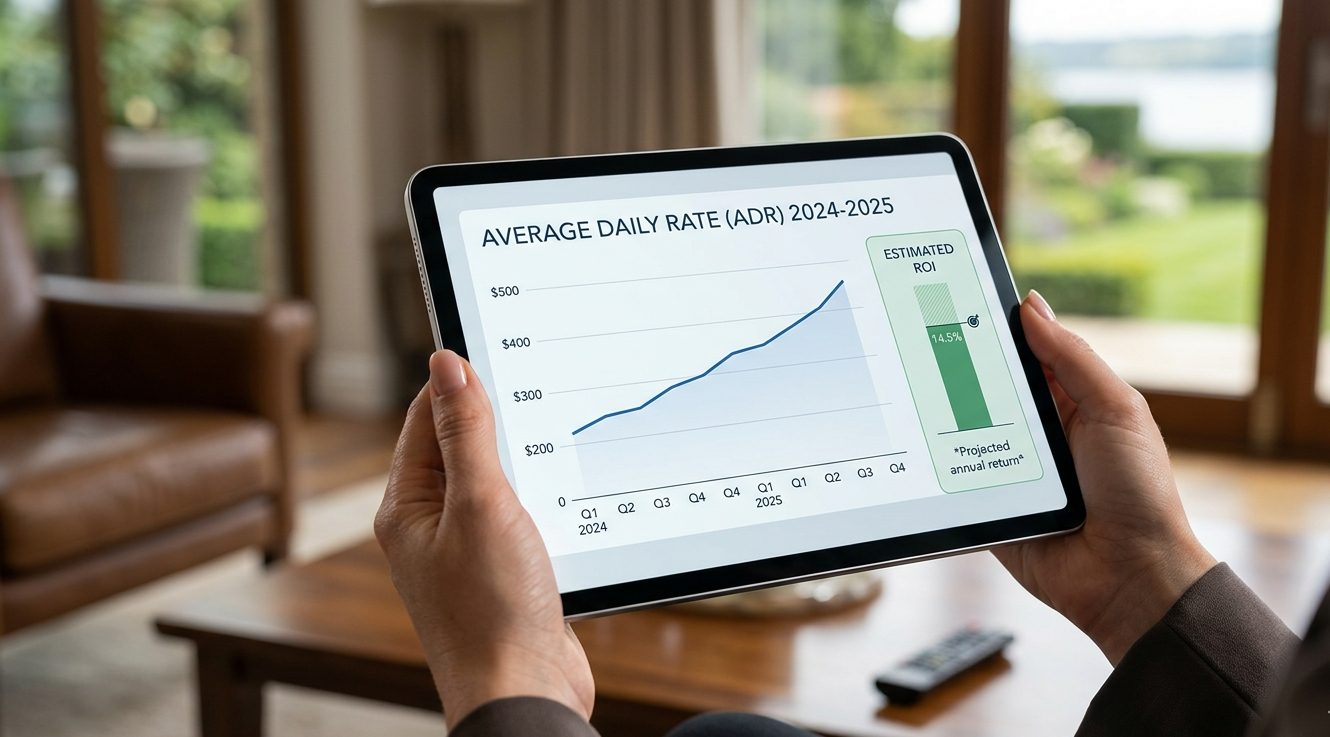
Average Daily Rates: Orlando vs. Miami
— and the Zip Codes That Outperform Both
Here’s the honest comparison every investor needs before picking a market. Orlando and Miami serve completely different investor profiles — and neither is universally “better.” The right answer depends on your capital, your risk tolerance, and how you plan to manage the property.
Orlando / Kissimmee
Theme Park Powerhouse- First-time investors with $350K–$600K budget
- Year-round, predictable demand
- Large group homes (4–8 bedrooms)
- DSCR loan qualification (strong rental income)
- City of Orlando restricts whole-home STRs
- Most STR-friendly properties are outside city limits
- Higher supply = more competition on platforms
- HOA restrictions vary dramatically
Miami / Fort Lauderdale
Luxury & Events Market- Premium property, higher nightly rates
- Event-driven income spikes (Art Basel, F1, Ultra)
- International buyer familiarity with the market
- Long-term appreciation play
- Miami Beach bans STRs in most residential zones
- High entry prices compress cap rates
- Strict regulatory enforcement
- Higher property taxes and insurance
The ADR outlier: Fort Walton Beach at $407/night
While Orlando and Miami get the headlines, Fort Walton Beach on the Emerald Coast averages $407.60 per night with a 62% occupancy rate and approximately $80,500 in average annual revenue — making it one of the highest ADR-to-entry-price ratios in the state. Proximity to Eglin Air Force Base also keeps bookings steady outside tourist season.
Highest-ROI Zip Codes for Florida STR Investment
The best zip codes are often adjacent to — not inside — the most-regulated cities. These are the areas where STR zoning is favorable, demand is proven, and entry prices still support strong cash-on-cash returns.
Home to ChampionsGate, Reunion, and Storey Lake — purpose-built resort communities that are legally designated for STR. The highest concentration of legally compliant vacation homes near Walt Disney World.
Western Orange County — close to Disney without City of Orlando STR restrictions. Upscale single-family homes in gated communities. Strong appeal to corporate relocators and luxury guests.
The heart of Emerald Coast STR territory. Low regulation, high nightly rates ($350–$500+), and strong summer demand from Southeast families. Fort Walton and Destin together form one of Florida’s most yield-positive markets.
These barrier island keys adjacent to Sarasota command $250–$400+ per night year-round. Siesta Key’s #1 beach ranking in 2025 keeps demand extremely high. Limited supply of compliant properties creates strong competitive positioning.
Highest average annual STR revenue in Florida at approximately $89,000. Extremely limited inventory and island-constrained supply. Best suited for high-capital investors using jumbo DSCR programs.
Canal-front properties unique to Southwest Florida. Affordable entry compared to other waterfront markets, with strong appreciation trajectory. Great DSCR loan candidate due to lower purchase prices relative to rental income.
Hands-Off Property Management in Florida:
Turnkey STR Investing for Remote & Foreign Buyers
One of the most common questions I get from international buyers and out-of-state investors: “Can I really buy a vacation rental in Florida and not be there to run it?” The honest answer is yes — but you need the right setup from day one.
What “Turnkey” Actually Means
A true turnkey short-term rental is a property that is:
When I search for investment properties for foreign buyers, I specifically filter for STR-compliant zones, verify HOA documents, and confirm license transferability before we make an offer. You don’t inherit someone else’s compliance problems.
Property Management Cost Breakdown
Professional management typically runs 15–25% of gross rental revenue. Here’s what that buys you:
Always factor management fees into your DSCR calculation. Use 35–45% as your total expense ratio when underwriting.
Best Areas for Turnkey STR Purchases in Orlando
These master-planned resort communities near Disney World are specifically designed for vacation rentals. They are the easiest places for foreign buyers to close, hand off to management, and generate income without ever setting foot in the property.
🏰 Reunion Resort
Gated resort with three championship golf courses, water park, and branded amenities. Premium price, premium rates. Management companies on-site. Strong repeat guest bookings.
⛳ ChampionsGate
One of the most active STR communities in Florida. Two pools, lazy rivers, resort facilities. Investor-friendly HOA. Well-established property management ecosystem. Great DSCR numbers.
🏡 Storey Lake
Newer community with Disney-themed amenities. Popular with families seeking Disney-adjacent stays. Lower entry price than Reunion. Strong occupancy due to brand-new inventory.
🌊 Windsor Hills
Established community with excellent track record. High occupancy, proven management companies, and a loyal repeat guest base. One of the original “STR resort” communities near Disney.
Real Answers to the Questions
You’re Actually Asking
These are the exact questions — typed and voice-searched — that bring investors to this page. Here are the direct answers, without the runaround.
Do Foreign Investors Need a U.S. Bank Account to Buy a Rental in Florida?
Short answer: Not to buy — but yes, almost certainly if you’re getting a mortgage.
You do not need a U.S. bank account to purchase Florida real estate. Cash buyers from any country can close without one. However, if you’re financing the property, virtually all lenders require a U.S. bank account for two reasons: it’s where they set up automatic mortgage payments (ACH), and it’s where you must hold your required cash reserves. The good news is that opening a U.S. bank account as a foreign national is straightforward — many buyers complete this before or during the loan process, and I guide clients through it as part of my buyer services.
For DSCR loans, your down payment funds need to be documented and often “seasoned” (held for a defined period) in a verifiable account. Foreign bank statements are generally accepted for this documentation, but the ongoing mortgage payments will require U.S. banking infrastructure post-closing.
Florida Rental Taxes: What Every STR Owner Owes
Florida short-term rental income is subject to multiple layers of tax. Most people know about one. Here’s the full picture:
Who collects what: Airbnb and VRBO now collect and remit state sales tax automatically on your behalf. However, you remain responsible for ensuring county Tourist Development Tax is properly handled — and for platforms other than Airbnb/VRBO, you may need to remit all taxes yourself. Always verify with your specific county tax collector.
The 14-day rule: If you rent your property for 14 days or fewer per year, the IRS considers that rental income tax-free and it does not need to be reported. This is the threshold where personal use and investment use diverge for tax purposes.
Deductions you can take: Mortgage interest, property taxes, insurance, management fees, cleaning, repairs, furnishings (depreciation), utilities, and platform fees are all deductible against rental income. For STR investors, proper categorization of expenses can significantly reduce net taxable income.
Tax structuring is part of the conversation I have with every investor client. I’ll connect you with a CPA who specializes in STR tax strategy. Schedule a call →
What Are the Tax Implications for a Canadian Citizen Buying an Airbnb in Kissimmee?
This is one of the most common questions I get from Canadian buyers — and for good reason. The Canada-U.S. tax relationship has more layers than most agents will tell you about. Here’s the complete picture:
- Rental income: Subject to U.S. income tax. By default, gross rent is subject to 30% withholding — but you can elect “net basis taxation” using IRS Form W-8ECI, which allows you to deduct expenses and pay tax only on net income instead. This election typically saves thousands annually.
- Annual filing: You’ll file Form 1040-NR (U.S. Non-Resident Alien Return) to report rental income and expenses.
- ITIN required: Canadian citizens need a U.S. Individual Taxpayer Identification Number (ITIN) — obtained via IRS Form W-7 — to file taxes and receive any refund of over-withheld amounts.
- State taxes: Florida has no state income tax. This is a significant advantage over STR investment in many other states.
- STR-specific taxes: The same 9%–13%+ Florida vacation rental tax structure applies regardless of owner nationality (see Florida Rental Taxes section above).
- Worldwide income: Canada taxes its residents on all worldwide income — including U.S. rental income. You’ll report your Kissimmee rental income to the CRA.
- Foreign tax credit: The Canada-U.S. Tax Treaty allows you to claim a foreign tax credit on your Canadian return for U.S. taxes paid, preventing double taxation. This is the treaty’s most valuable provision for rental property owners.
- Form T1135: If your U.S. property is worth over CAD $100,000, you must file Form T1135 (Foreign Income Verification Statement) with the CRA annually. Missing this carries penalties up to $2,500/year.
- Exchange rate risk: Your Canadian capital gain is calculated in CAD — so a weaker CAD relative to USD at sale could generate a taxable gain in Canada even if your U.S. gain is modest.
- What it is: Under the Foreign Investment in Real Property Tax Act (FIRPTA), the buyer of your Kissimmee property must withhold 15% of the gross sale price and remit it to the IRS.
- Not the final tax: FIRPTA withholding is a prepayment, not your final bill. When you file Form 1040-NR after the sale, the actual capital gains tax (max 20% federal for long-term gains) is calculated, and you receive a refund if more was withheld than owed.
- Exemptions: If the buyer will use the property as a primary residence and the sale price is under $300,000, no withholding is required. Between $300K–$1M for a personal-use purchase, withholding drops to 10%.
- Estate tax risk: U.S. estate tax can apply to Canadian estates holding U.S. property. The treaty provides some credit, but properties over $60,000 USD at death can trigger a U.S. estate tax filing.
- Avoid U.S. LLC: Contrary to popular advice, a U.S. LLC is generally a poor structure for Canadians — it can result in tax rates over 70% due to U.S. branch profits tax layered with Canadian rules. Get cross-border tax advice before choosing your ownership entity.
- U.S. Limited Partnership: Often the recommended structure for Canadians — treated as a flow-through entity in both countries, provides liability protection, and avoids the LLC double-taxation problem.
- Personal direct ownership: Simple and works — but exposes your worldwide estate to U.S. estate tax risk at death. Appropriate for lower-value properties.
- Consult a cross-border specialist: The tax interactions are complex enough that I always recommend a CPA licensed in both the U.S. and Canada before buying. I’ll connect you with one.
Non-Resident Rental License Florida Requirements: What Foreign Investors Must Do Before Listing
Foreign nationals have the same licensing obligations as U.S. citizens when operating a short-term rental in Florida. There is no separate “non-resident” license — but there are important setup steps that out-of-state and international buyers often miss.
Get Your ITIN (if no SSN)
An Individual Taxpayer Identification Number is required for tax registration and filing. Apply using IRS Form W-7. Processing takes 7–11 weeks, so apply early. You cannot skip this step.
Obtain DBPR Vacation Rental License
Required for any property rented for fewer than 30 consecutive days more than 3 times per year. Apply at myfloridalicense.com. Choose the correct category: Dwelling (single/multi-family) or Condo unit. Annual renewal required.
Register for Florida Sales Tax
Register with the Florida Department of Revenue to collect and remit the 6% state transient rental tax (plus applicable surtax). Can be done online at floridarevenue.com.
Register for County Tourist Development Tax
Each county has its own tourist tax account. Some counties are administered by the FL Dept. of Revenue; others require direct registration with the county tax collector. In Orange County (Orlando), this goes through the Orange County Comptroller’s office.
Obtain City / County Local Permit (if required)
Many cities require a Business Tax Receipt and/or separate STR registration beyond the DBPR license. Check with your specific municipality — this varies significantly. Fort Lauderdale, Sarasota, and Pinellas County all have their own registration processes on top of the DBPR license.
Meet Safety Requirements
Florida requires smoke detectors, fire extinguishers, pool safety equipment (if applicable), clean linens, and pest-free environments. Some cities require noise detection devices (e.g., Fort Lauderdale since 2023). An inspection may be required before the DBPR license is issued.
Airbnb-Friendly Cities in Florida: The 2025–2026 Definitive List
Based on current regulations, zoning flexibility, and enforcement environment — here’s how Florida’s major markets rank for whole-home STR investing.
- Kissimmee / Osceola County — Purpose-built resort communities, designated tourist zones, investor-first approach
- Destin / Fort Walton Beach — Minimal regulation, strong yield, low enforcement risk
- Tampa (select zones) — Flexible STR zoning in most districts, strong occupancy
- Cocoa Beach — Commercial zone STRs allowed; beach proximity drives demand
- Davenport / Daytona Beach area — STR-favorable, lower entry prices, near major attractions
- Fort Lauderdale — Heavy regulation but legal; strong returns for compliant operators
- Sarasota — 7-day minimum, registration required, still high-ROI
- Pinellas County — Certificate of Use required; St. Pete Beach has its own overlay
- Jacksonville — Allowed with registration; enforcement growing
- Naples — Permitted but regulations tightening; verify per parcel
- Miami Beach — Effectively banned in most residential zones through zoning; heavy fines
- City of Orlando — Whole-home STR prohibited; only owner-occupied home-sharing allowed
- Unincorporated Orange County — No STRs outside commercial/grandfathered zones
- Clearwater — Prohibits STRs under 30 days in most residential zones
- City of Miami — Operational Management Plan required; strict enforcement
📌 The investor’s rule of thumb: In Central Florida, buy in Osceola or Polk County communities, not inside the City of Orlando. On the Gulf Coast, Destin and Fort Walton outperform Clearwater for whole-home STR compliance. On the Atlantic side, Fort Lauderdale with full compliance often outperforms Miami Beach for investable properties.
Florida STR Investor FAQ
These are the questions I get asked most — from first-time investors, international buyers, and people who’ve been told “no” by another lender. If your question isn’t here, let’s talk.
Ready to Invest in Florida Short-Term Rentals?
One conversation. One agent. One lender. I’ll help you find the right market, the right property, and the right loan — without sending you to three different people who’ve never met each other.
Or call/text directly: 407-603-1664 · No pressure. Just strategy.