S
Stacy Ann Stephens | REALTOR®
Keller Williams Realty Winter Park · 147 W Lyman Ave, Winter Park FL 32789 · 407-603-1664 · License #BK3393979
Dual-licensed REALTOR® + Mortgage Broker NMLS #1933745 — I know both sides of this equation
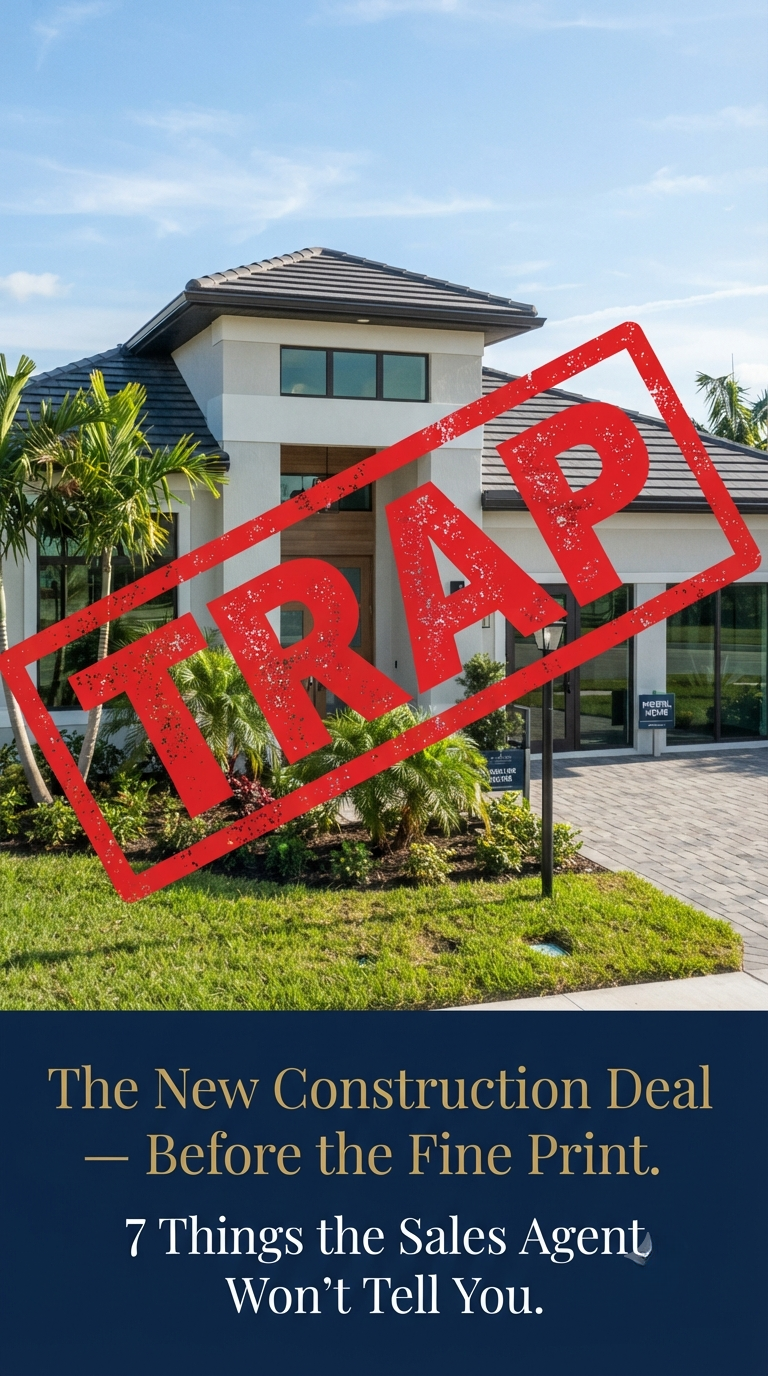
Let me tell you something important about the model home you just toured: it was designed by a professional staging team, outfitted with every possible upgrade, and positioned in the best lot in the community. The price on the brochure is the base price. The home you’re standing in costs significantly more — and the sales agent in that office has one job, which is to sell you a home at the highest profitable margin for the builder.
That doesn’t make them dishonest. It makes them doing their job. The problem is that most buyers in Central Florida walk into a new construction community without representation — assuming the process is simple and transparent. It often isn’t.
Here are the seven traps I see buyers fall into, and exactly how to protect yourself from each one.
Trap #1
Walking In Without Your Own Agent — And Losing Your Right to Representation
Most builders have a “first visit” rule: if you enter the community without a registered buyer’s agent, the builder’s sales team claims you as a direct customer and may refuse to work with an agent you bring in later. The builder’s on-site agent represents the builder’s interests — period. They will not tell you about a better lot in the next phase, alert you to pending price increases, or negotiate on your behalf.
The Fix: Register your buyer’s agent with the builder on your first visit — before you tour anything. Your agent’s commission is typically paid by the builder, meaning professional representation costs you nothing as the buyer. In 2026, after the NAR settlement changes, confirm commission arrangements upfront — but in most new construction, builder-paid agent commissions are standard practice.
Trap #2
Taking the Builder’s Preferred Lender Without Comparing the True Cost
This is where buyers lose the most money. Builders offer substantial incentives — $10,000–$20,000 in closing cost credits, design center credits, or rate buydowns — if you use their affiliated in-house lender. What they don’t emphasize: their preferred lender may carry a higher interest rate that costs more over the life of your loan than the incentive is worth. Under RESPA, builders cannot require you to use their lender. The incentive is conditional, not mandatory.
The Fix: Get a Loan Estimate from the builder’s preferred lender AND at least two independent lenders for the identical loan scenario. Compare the Annual Percentage Rate (APR) — which includes fees — not just the headline interest rate. Calculate total loan cost over your expected ownership period. Subtract the incentive from the builder’s lender’s total cost. Take the lower number.
Trap #3
The Design Center Upgrade Spiral
The design center appointment is an expertly managed retail experience. You sit in a beautiful showroom and choose everything for your home — flooring, countertops, cabinets, fixtures — usually within 30 days of signing. The standard options look basic next to the upgraded displays. The upgrades are marked up significantly (often 100–300% above what you’d pay at retail or through a contractor after closing). And there’s psychological pressure to decide quickly.
The Fix: Prioritize structural upgrades you can’t add later — extended garages, larger windows, additional bedrooms, upgraded electrical panel, impact glass. Skip aesthetic upgrades (flooring, countertops, fixtures) that you can install yourself after closing for 30–60 cents on the dollar. Never spend more than 10–20% of the base price on upgrades — going above that increases your appraisal gap risk.
Trap #4
Skipping the Independent Home Inspection
New construction buyers often assume that because the home is brand new, it doesn’t need an inspection. This is one of the costliest assumptions in real estate. Builder quality control is imperfect — framing errors, insulation gaps, plumbing connection issues, electrical rough-in mistakes, and HVAC installation problems are common and frequently missed by municipal inspectors who are reviewing code compliance, not catching every defect.
The Fix: Hire an independent inspector for two walkthroughs: (1) a pre-drywall inspection, where they can see framing, electrical, and plumbing before the walls are closed — this is the most valuable inspection in new construction; and (2) a final blue-tape walkthrough before closing. Both walkthroughs together typically cost $400–$700 and can prevent problems that cost tens of thousands to remediate after closing.
Trap #5
Not Understanding Impact Fees — The Hidden Cash-to-Close Cost
Florida counties charge impact fees on new construction to fund infrastructure — roads, schools, parks, fire stations. These fees are often not mentioned prominently in builder advertising, and they can be substantial. In some Central Florida counties, impact fees on a single-family home range from $8,000 to $30,000+ and are typically paid by the buyer at closing — on top of your standard closing costs and down payment. When you factor in closing costs (typically 3% of purchase price) plus impact fees, your total cash to close can be $40,000–$60,000+ above the down payment on a $400,000 home.
The Fix: Ask the builder’s sales agent point-blank: “Are impact fees included in the advertised price, or are they added at closing?” Get the answer in writing. Then verify with your county’s impact fee schedule. Budget for total cash to close — not just the down payment.
Trap #6
Not Locking Your Rate Early Enough — or Locking It Too Early
Standard rate locks are 45–60 days — designed for resale transactions that close in 30–45 days. New construction timelines in Central Florida are currently running 9–12 months from contract to closing. If you lock your rate at contract signing, it expires long before your home is ready. If you wait until 60 days before closing, you absorb rate risk for the entire build period — and 2026 has shown that rates can move meaningfully in either direction over 9 months.
The Fix: Understand the difference between a standard lock and an extended or float-down rate lock. Ask your lender about extended lock programs (often available at a cost) and float-down provisions that let you capture a lower rate if rates drop during construction. As a licensed mortgage broker, I can structure this conversation for you. Many builder-affiliated lenders offer forward commitment rate packages — but read the fine print on when they expire.
Trap #7
Assuming the Builder Contract Protects You — It Doesn’t
Builder contracts are written by builder attorneys, for builder interests. They typically include: (a) substantial earnest money requirements (often 3–5% of purchase price) that you can lose if you back out for reasons not covered by your contingencies; (b) construction delay clauses that extend timelines with no penalty to the builder, leaving you without a home if your lease expires; (c) change order provisions that can increase your final price; and (d) very limited buyer recourse if quality doesn’t meet expectations. Most buyers don’t have a real estate attorney review the contract. That’s a mistake when the contract is often 50+ pages.
The Fix: Have a Florida real estate attorney review any builder purchase contract before signing. Understand exactly what triggers allow you to cancel and recover your deposit. Budget for potential temporary housing if your build runs 1–3 months over the projected timeline. And bring a buyer’s agent who has negotiated with that specific builder before — experience matters enormously here.
The good news about Central Florida new construction in 2026: Builders are offering real incentives — closing cost credits, rate buydowns, and even price flexibility on quick-move-in inventory homes. In some price ranges, new construction is actually priced lower than comparable resale homes. The opportunity is real — you just need to be informed enough to capture the value and avoid the pitfalls.
Frequently Asked Questions
Do I need my own agent to buy new construction in Florida?+
Yes — and it typically costs you nothing. In most Central Florida new construction communities, the builder pays the buyer’s agent commission. The builder’s on-site sales agent represents the builder’s interests, not yours. Your own buyer’s agent can review the contract, compare incentives, negotiate on your behalf, and protect you throughout the process. Register your agent with the builder on your very first visit — before touring alone — to protect your right to representation.
Should I use the builder’s preferred lender for my mortgage?+
Not without comparing. Builder-affiliated lenders often offer substantial incentives — $10,000 to $20,000 in credits — but may carry higher interest rates that cost more over the loan term than the incentive is worth. You are never required to use the builder’s lender (RESPA prohibits mandating it). Get a Loan Estimate from the builder’s lender and at least two independent lenders for the same loan scenario, then compare APR and total cost over your expected ownership period.
How long does new construction take in Central Florida in 2026?+
Build timelines for production builders in Central Florida in 2026 are running 9 to 12 months from contract to closing, with some custom builders taking longer. Construction labor shortages and permitting delays continue to extend timelines. If you are renting, build a 2 to 3 month buffer beyond the builder’s projected completion date before committing to a lease end date.
What are impact fees and do I pay them when buying new construction in Florida?+
Impact fees are infrastructure charges Florida counties assess on new home construction to fund roads, schools, parks, and fire stations. They are separate from closing costs and are paid by the buyer at closing in most transactions. Amounts vary dramatically by county — from approximately $8,000 to $30,000+ for a single-family home. Always ask whether impact fees are included in the builder’s advertised price or added at closing, and verify with your county’s impact fee schedule.
Do I need a home inspection on a brand-new construction home?+
Absolutely yes. New construction is not exempt from defects. Builder quality control processes and municipal inspections check for code compliance — they do not catch every installation error, framing issue, or system deficiency. Independent inspectors regularly find problems in brand-new homes. Schedule both a pre-drywall inspection (the most valuable — you can see everything before walls are closed) and a final blue-tape walkthrough before closing.
You Deserve Someone on Your Side — Not the Builder’s
I represent buyers in Central Florida new construction deals every month. I know which builders are transparent, which communities have strong resale, and exactly how to run the math on builder incentives vs. outside financing. My representation costs you nothing.
📞 Free Consultation: 407-603-1664S
Stacy Ann Stephens | REALTOR® · Mortgage Broker
Keller Williams Realty Winter Park · 147 W Lyman Ave, Winter Park FL 32789 · 407-603-1664
License #BK3393979 · NMLS #1933745 · Jhenesis Mortgage NMLS #2532705