What Is It Like to Live in a Central Florida Agrihood — And Is the Eco-Tech Life Actually Worth It?
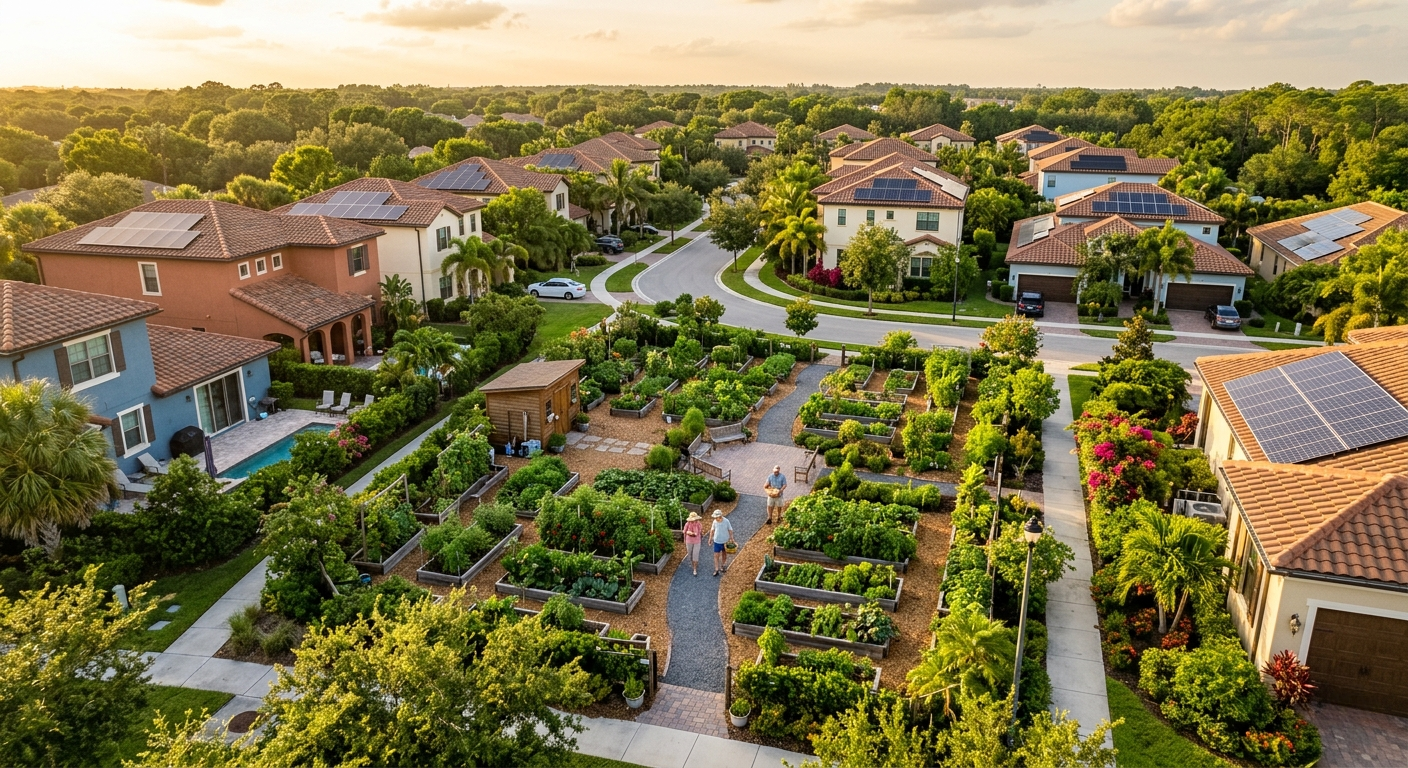
The golf course is almost extinct in new Florida development. What’s replacing it — and what serious buyers are actually choosing over it — is something far more interesting: community farms, solar-standard neighborhoods, and homes designed to produce as much energy as they consume.
I’ve toured enough communities and talked to enough families to say this without hesitation: the wellness-focused, sustainability-forward buyer is the fastest-growing segment in Central Florida real estate right now. And they’re not finding what they want in the typical suburb. Let me show you what does exist — and whether the lifestyle lives up to the vision.
“The average Central Florida household spends $2,200–$3,100 annually on electricity. In a properly solar-equipped home with modern insulation and smart systems, that number drops to $200–$600 — or becomes net zero.”
Why Are Affluent Buyers Rejecting the Standard Florida Neighborhood?
Here’s what I hear consistently: buyers relocating from the Pacific Northwest, Colorado, and the Northeast are not comparing Central Florida to their old city’s suburbs. They’re comparing it to the intentional communities, farm-to-table neighborhoods, and net-zero developments they’ve seen elsewhere. And for a long time, Florida didn’t have an answer.
That’s changed. The convergence of solar incentives, green building standards, and shifting buyer demand has sparked a genuine eco-tech residential wave in Central Florida. These aren’t novelty communities — they’re producing measurable financial returns on top of lifestyle benefits.
What Agrihood and Eco-Tech Communities Exist Near Orlando Right Now?
Harbors at Venetian Bay
New Smyrna Beach / Volusia CountyWorking community farm with resident plots, composting programs, and a community garden coordinator. Within 90 minutes of Orlando — increasingly a telecommuter relocation choice.
Wellness Ridge
Clermont / Lake CountyDesigned around the health and wellness lifestyle — walking trails, fitness-focused amenities, farm-to-community concepts. On the Central Ridge with elevation and scenic terrain rare in Florida.
Hamlin / Horizon West
Winter Garden / Orange CountyTown Center design with walkable retail, farmer’s market infrastructure, and solar-ready new construction from multiple builders. Strong school district, no commute pressure with remote work.
Eco-Enclaves in Groveland
Lake CountySmaller acreage parcels allowing horses, chickens, and food gardens alongside modern construction. Lake County zoning allows genuine homesteading within 45 minutes of Orlando.
How Does Net-Zero Living Actually Impact Your Monthly Bills in Florida Summer?
Let’s be honest about Florida’s challenge: air conditioning is not optional. From May through October, a typical 2,000 sq ft home runs 8–10 hours of AC daily. That’s where the bills come from — and where eco-tech design either proves or fails its promise.
The combination that actually works in Florida’s climate is layered: a well-insulated building envelope (spray foam insulation is the local standard for new construction), reflective roof coatings, strategic window orientation, smart thermostat controls, and a properly sized solar array. When all four are in place, the math changes dramatically.
Buyers who are purchasing solar-equipped new construction in Hamlin or Wellness Ridge today are locking in Florida Power & Light net metering agreements that credit excess solar production back to the grid at retail rates — meaning their best summer months can produce zero-dollar bills or small FPL credits.
☀️ Solar Savings Estimator — Florida Summer
Estimate your monthly energy costs with and without solar in Central Florida
Estimates based on Florida average solar production of 4.5 peak sun hours/day. Actual results vary based on roof orientation, shading, and utility rate changes. Not financial advice.
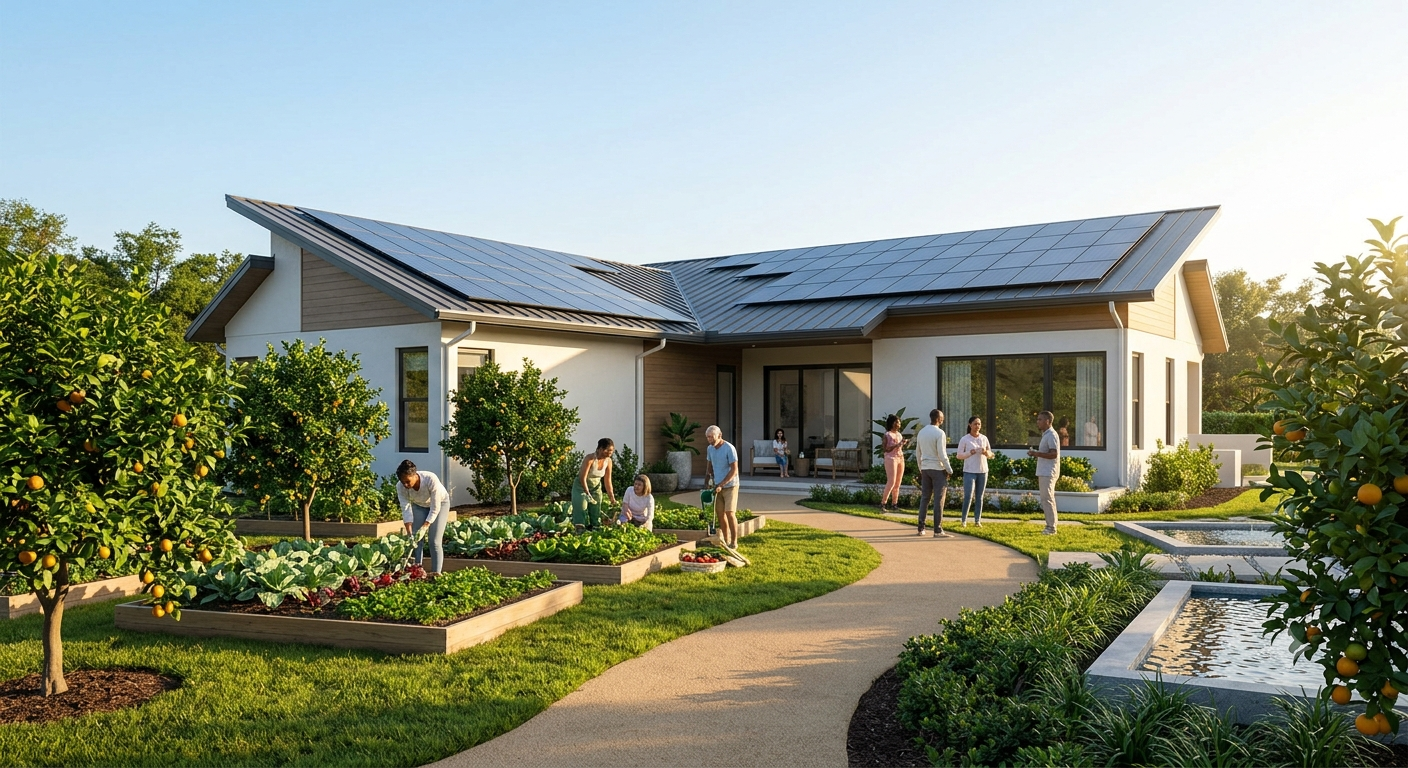
Imagine a Home That Grows Food and Generates Energy — What Does That Future Look Like?
In communities like the ones above, the dream is already becoming daily life for some residents. Families who bought into Hamlin’s early phases with solar panels installed in 2021 have now accumulated 4+ years of dramatically reduced utility bills — and seen their homes appreciate faster than the comparable non-solar inventory on either side of the street.
The agrihood vision goes further: community-managed citrus groves and raised bed plots reduce grocery bills for participating households by an estimated $60–$150/month. In Lake County communities with acre-plus lots, backyard chickens and small food gardens aren’t just permitted — they’re culturally expected.
There’s something genuinely different about coming home to a neighborhood that produces things, not just consumes them. I’ve watched buyers who were initially skeptical about the concept fall completely in love after a single community tour. The question isn’t whether this lifestyle is worth it. It’s whether you can find the right community before the price reflects the demand.
Frequently Asked Questions
What is an agrihood community?
An agrihood is a residential community designed around a working farm or community agriculture program. Residents typically have access to shared garden plots, community-supported agriculture (CSA) shares, and communal green spaces designed for food production. In Central Florida, agrihood elements are increasingly being incorporated into master-planned communities alongside solar and wellness amenities.
Are solar panels required in any Central Florida new construction communities?
Several newer communities in Lake County and Orange County require solar-ready construction as a baseline — meaning roof orientation, electrical pre-wiring, and conduit are built in, even if panels aren’t included in the base price. Some luxury communities include solar as standard. The Florida Building Code increasingly supports this approach.
How does Florida’s net metering policy work for homeowners with solar?
Under Florida’s net metering program, excess solar electricity you generate is credited back to your account at the retail rate. When your system produces more than you use (typically midday in spring and fall), those credits offset your evening and nighttime consumption. Florida law currently protects retail-rate net metering for systems installed before 2029, after which the credit structure may change.
Do eco-conscious homes in Central Florida command a price premium?
Yes, and the premium is measurable. A 2024 analysis of Florida MLS data showed solar-equipped homes sold for approximately 3–8% more than comparable non-solar homes in the same subdivision. Homes with community farm access, walkability scores above 40, and premium wellness amenities are now consistently commanding 10–15% premiums over comparable conventional communities.
Can I keep chickens or a food garden in Central Florida communities?
It depends entirely on your zoning and HOA. Unincorporated Lake County and rural Orange County parcels generally permit small-flock chickens and food gardens. Most HOA communities in incorporated cities prohibit chickens. Always verify the specific ordinance for your address — and confirm what the HOA CC&Rs allow separately from county zoning.
Ready to Find Your Eco-Tech Home?
Whether you’re looking for a solar-equipped new build, an agrihood community, or a private acreage property in Lake County, I can help you find exactly what you’re envisioning — and what it will cost to own it well.
Book a Lifestyle Buyer Consultation