
How to Read a Florida Closing Disclosure: Every Section Explained for Buyers
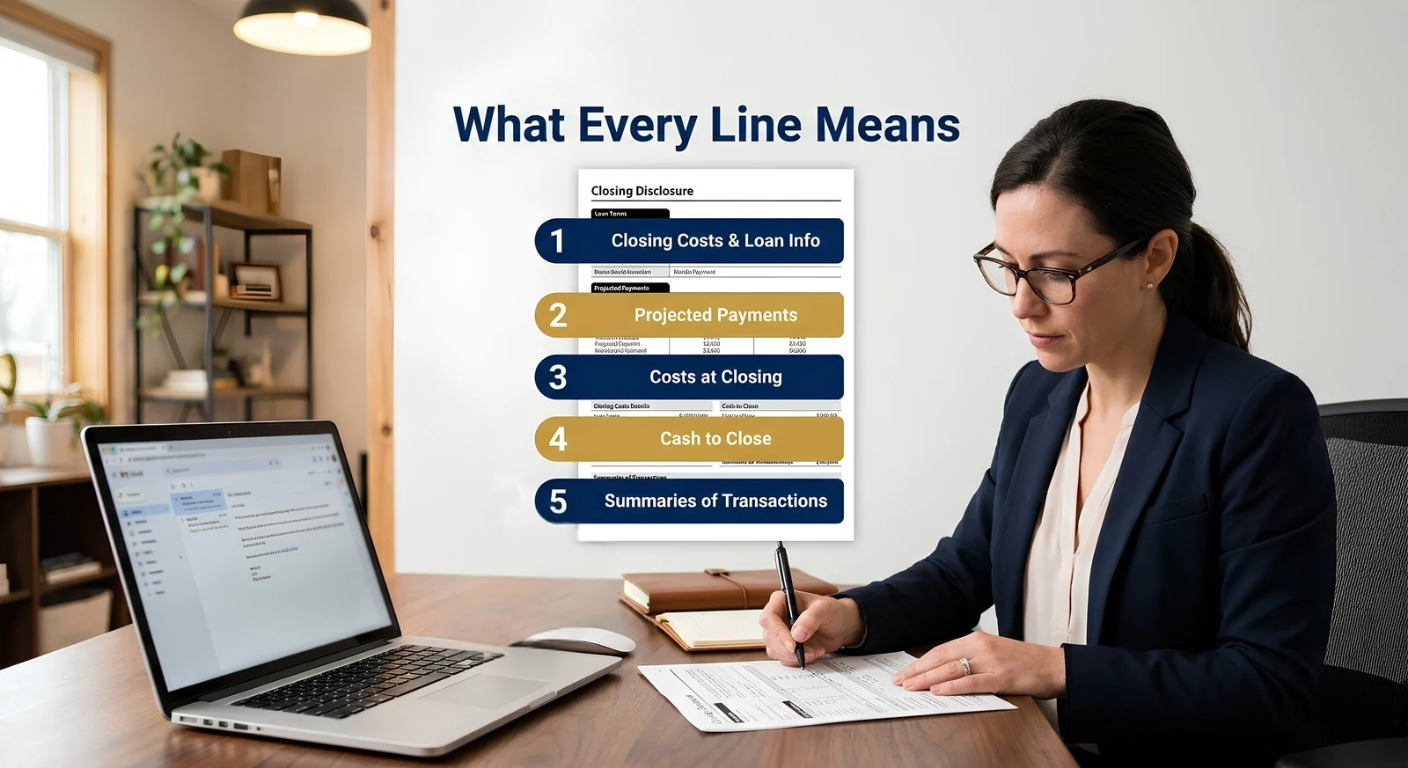
You’ll receive your Closing Disclosure three business days before closing. You have the right — and the responsibility — to review every number on it before you sit down to sign. Here’s every section in plain language.
The Closing Disclosure is not a document to glance at and set aside. It tells you exactly what your loan costs, what Florida-specific taxes you’re paying, what’s going into escrow, and how every dollar of your cash-to-close was calculated. Errors on this document happen — and if you don’t catch them three days before closing, you’ll be catching them at the table.
Let’s go section by section.
The Closing Disclosure Sections — Click to Expand Each One
Section A lists what your lender charges directly — these fees are controlled entirely by your lender and cannot increase from your Loan Estimate to the Closing Disclosure (zero tolerance).
What to check: Compare Section A line by line to your Loan Estimate. If any fee increased, your lender must explain why — and many lender fee increases are not permitted without a valid change-of-circumstances reason.
Section B includes services the lender required but where you chose the provider (like title insurance). Section C includes services where the lender chose the provider. B fees can increase by no more than 10% from the Loan Estimate.
Section E is where Florida buyers pay taxes that buyers in most other states never see. These are fixed by state law and don’t vary by lender.
Florida note: If you see doc stamps on the deed in Section E, those are the seller’s doc stamps — which sellers typically pay. The buyer pays doc stamps on the mortgage note and the intangible tax on the mortgage. Both appear in Section E of the buyer’s CD.
Prepaids are amounts collected at closing for costs that will come due soon after. They are not fees — they are future expenses paid upfront.
Prepaid interest tip: Closing later in the month reduces your prepaid interest (fewer days until month end). Closing on the 28th instead of the 5th on a $350,000 loan at 6.5% can save you around $1,500 in prepaid interest at closing — though it pushes your first mortgage payment one month earlier.
Your lender holds an escrow account to pay your property taxes and insurance when they come due. At closing, you seed this account with several months of reserves. The lender is permitted to collect up to two months of cushion.
Why G matters for Florida buyers: Florida’s high insurance premiums mean the initial escrow deposit is often larger than buyers expect. Combined with Section F prepaids, insurance alone can add $3,000–$7,000 to your cash-to-close.
Section H is a catch-all for miscellaneous closing costs. In Florida, this is where several property-specific items often appear.
Florida Cash-to-Close Calculator
Estimate your total cash needed at closing based on your purchase details.
Florida Buyer Cash-to-Close Estimator
Enter your purchase details to see an estimated breakdown of your closing day costs.
Estimates only. Your actual Closing Disclosure will include exact figures. Consult your lender and a licensed Florida REALTOR® for a formal cost estimate.
Closing Disclosure Verification Checklist
When your CD arrives, review each of these before the 3-day window closes.
Before You Sign — CD Verification Checklist
Frequently Asked Questions — Florida Closing Disclosure
Questions About Your Closing Disclosure?
I review closing disclosures with my buyers before every closing to catch discrepancies before they become problems. Let’s connect — before your closing date, not after.