
Florida Home Inspection Guide for Buyers: Every Type, Cost, and What to Do After

Florida Home Inspection Guide for Buyers: Every Type, Cost, and What to Do After

A standard inspection is the starting line in Florida, not the finish line. Here’s every inspection type you need to know — what each reveals, what it costs, and how to use the results to protect your investment.

6types of inspections Florida buyers should know
25 yrshome age that triggers 4-point inspection requirement
20–45%potential insurance savings from wind mitigation report

I’ve watched buyers get blind-sided at closing by insurance quotes three times higher than they expected — because no one explained that a 30-year-old roof and aluminum wiring would be flagged in a 4-point inspection. I’ve also watched buyers walk away from deals over termite damage a $100 WDO inspection would have caught before emotions got involved.

The inspection period in a Florida contract is your best opportunity to understand exactly what you’re buying. Here’s how to use it well.

The 6 Types of Home Inspections Florida Buyers Need to Know

Standard General Inspection
$300–$600 | 2–4 hours

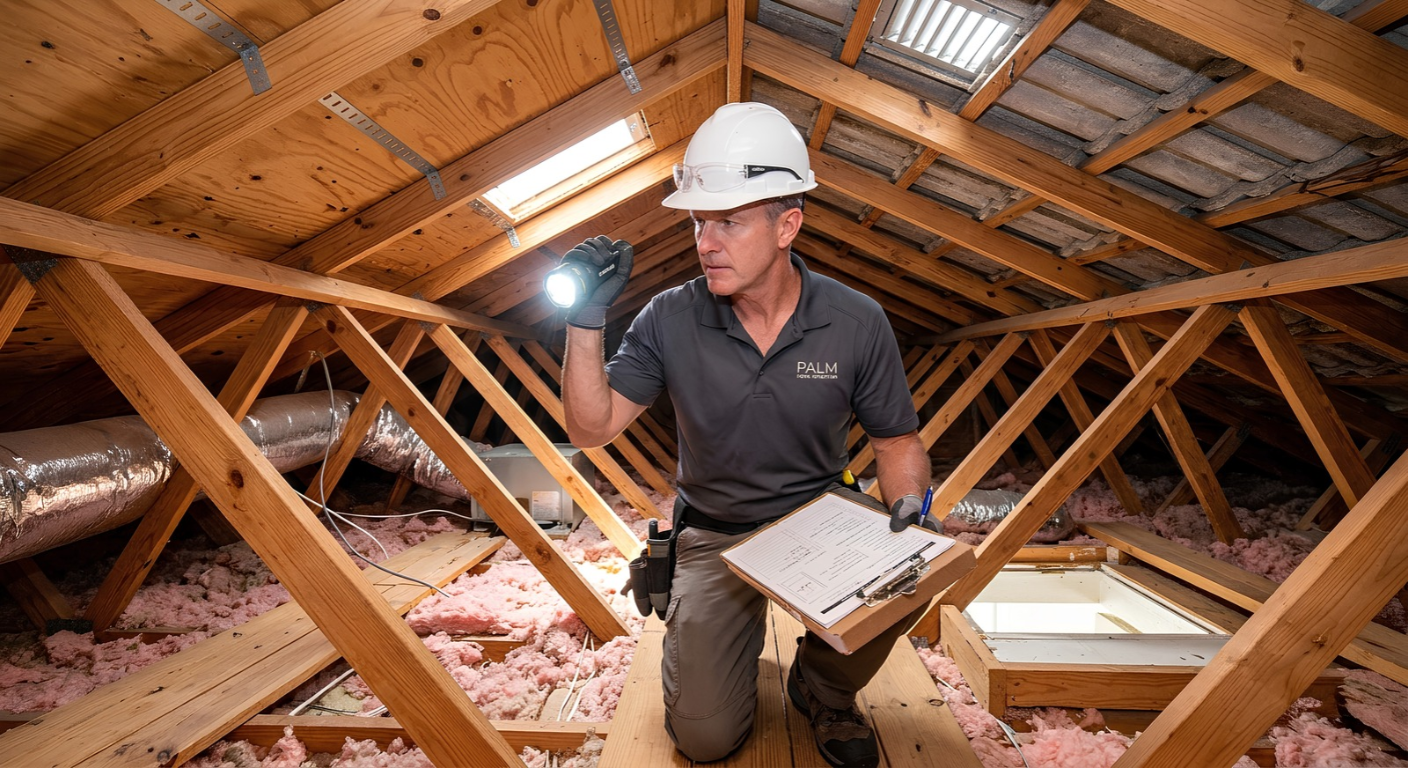
A licensed Florida home inspector (state license required) examines all visible and accessible systems: roof, attic, foundation, exterior, HVAC, plumbing, electrical, interior rooms, windows, and doors.

When: Every purchase, every property. This is the baseline.

4-Point Inspection
$75–$150 | ~1 hour

Focuses on the four systems home insurers care most about: roof, electrical panel and wiring, plumbing, and HVAC. The report goes to the insurance company. Issues flagged here — like aluminum wiring, polybutylene pipes, or a roof over 15 years old — can make a home difficult or expensive to insure.

When: Required by most Florida insurers for homes 25+ years old. Always order on older homes.

Wind Mitigation Inspection
$75–$150 | ~1 hour

Evaluates hurricane-resistance features: roof shape, roof deck attachment, roof-to-wall connections, and impact windows/doors. The resulting report can significantly reduce the wind portion of your homeowners insurance — often 20–45% of the wind premium.

When: Optional but almost always worth it. Especially valuable on newer construction or homes with hip roofs and impact windows.

WDO / Termite Inspection
$75–$125 | ~1 hour

Wood-Destroying Organism inspection performed by a licensed pest control company (not the general inspector). Identifies active termite infestations, wood rot, and other WDO activity. Florida’s subtropical climate makes termite risk real on virtually every property.

When: Every Florida home purchase. Non-negotiable in this climate.

Mold Inspection
$300–$600 | 2–3 hours

Air quality samples and visual inspection for mold growth, often including moisture mapping. Florida’s heat and humidity make mold common, especially in HVAC systems, attics, and spaces with prior water intrusion.

When: If the general inspector notes musty odors, visible staining, high moisture readings, or any history of flooding or roof leaks.

Radon Inspection
$100–$200 | 48+ hours

Tests for radon gas, a naturally occurring radioactive gas that can accumulate in homes. Florida is generally low-risk compared to northern states, but parts of Central and North Florida — particularly areas with phosphate deposits — can have elevated levels.

When: If purchasing in Central/North Florida, especially homes built over fill or near phosphate mining areas.

Florida Inspection Cost Estimator

Select the inspections you plan to order and see your estimated total cost range.

Build Your Inspection Package

Click each inspection to include or exclude it. Total updates automatically.

General Home Inspection
$300–$600
~$450
4-Point Inspection
$75–$150
~$110
Wind Mitigation Inspection
$75–$150
~$110
WDO / Termite Inspection
$75–$125
~$95
Mold Inspection
$300–$600
~$450
Radon Inspection
$100–$200
~$150
Estimated inspection package total $545

After the Inspection: What to Ask For, What to Take a Credit On, What to Let Go

This is where deals fall apart unnecessarily. The inspection report is not a list of everything the seller must fix — it’s a risk assessment tool. Here’s how to read it strategically.

Active roof leak or interior water damage Request repair or walk
Active leaks cause ongoing damage. Either the seller repairs and documents before closing, or you walk away. A credit rarely suffices because you don’t know the true damage scope until it’s opened up.
Active termite infestation (WDO) Request treatment
Seller typically addresses active infestations and provides a clear WDO letter before closing. If structural damage is present, get a specialist assessment on scope before deciding how to proceed.
Non-functioning HVAC or major electrical panel issue Request repair or credit
HVAC replacement runs $5,000–$12,000+. Electrical panel replacement $2,000–$6,000+. Either request documentation that the system is serviced and operational, or negotiate a credit equal to the repair cost.
Aging roof within 3–5 years of end-of-life Negotiate credit
A roof with 3–5 years of life remaining isn’t an emergency, but it’s a known future cost. Negotiate a credit toward replacement rather than asking the seller to replace it now — their contractor will always be less expensive, and you’ll want to choose your own roofer anyway.
Multiple minor plumbing or electrical deficiencies Negotiate credit
A leaky faucet here, a missing GFCI outlet there, a hot water heater at 12 years. Package these together and negotiate a flat credit — $1,500–$3,000 — rather than asking the seller to individually address ten items they’ll do cheaply and fast.
Cosmetic items: paint, cracks in drywall, worn carpet Price was already set
You negotiated the purchase price partly based on condition. Cosmetic items visible during showings don’t belong in a post-inspection repair request — they were already factored in, and asking for them poisons goodwill on the items that actually matter.
Pro tip: In an AS IS contract, your leverage is the ability to cancel and walk away with your deposit. Sellers know this. A well-reasoned request citing specific repair costs is far more effective than a laundry list. Choose your battles — the significant issues are winnable. The cosmetic ones cost you credibility.

Frequently Asked Questions — Florida Home Inspections

What inspections do Florida home buyers need? +
Florida buyers should consider six types depending on the property: a standard general inspection ($300–$600), a 4-point inspection ($75–$150) for homes 25+ years old, a wind mitigation inspection ($75–$150) for insurance savings, a WDO termite inspection ($75–$125) for any Florida home, a mold inspection ($300–$600) if moisture is suspected, and a radon inspection ($100–$200) in parts of Central and North Florida. A good buyer’s agent will help you prioritize based on the home’s age, location, and what the seller has disclosed.
What is a 4-point inspection in Florida and why is it required? +
A 4-point inspection focuses on the four systems Florida insurers care about most: roof, electrical, plumbing, and HVAC. Most Florida insurance companies require it on homes 25 years or older before issuing a new policy. Issues flagged — like aluminum wiring, polybutylene pipes, or a roof over 15 years old — can make a home difficult or very expensive to insure. The inspection costs $75–$150 and takes about an hour. Smart buyers order it as a separate line item alongside the general inspection.
What is a wind mitigation inspection in Florida? +
A wind mitigation inspection evaluates features that reduce hurricane damage risk: roof shape, roof deck attachment, roof-to-wall connections, and whether the home has impact windows and doors. The resulting report submitted to your insurer can reduce the wind portion of your premium by 20–45%. On a $3,000 annual premium, that could mean $600–$1,350 in annual savings. At $75–$150 for the inspection, it pays for itself in the first year.
How long do I have to complete inspections in Florida? +
The inspection period in a Florida purchase contract is typically 10–15 days from the effective date (the date both parties sign). In an AS IS contract, you can cancel for any reason and receive your earnest money back during this window. Schedule your inspections immediately after going under contract — inspectors book out, and your clock is already running the day you sign.
Can I negotiate repairs after a home inspection in Florida? +
Yes. In a standard FAR/BAR contract, buyers can formally request specific repairs in writing. In an AS IS contract (far more common in Florida), sellers aren’t required to fix anything — but you can still negotiate a price reduction or closing credit for material items. In today’s buyer’s market, sellers are more willing to accommodate requests than in recent years. Focus on safety, structural, and insurance-related issues. Cosmetic items and minor deferred maintenance are typically not worth negotiating.
Is mold common in Florida homes? +
More common than in most states, yes. Florida’s heat, humidity, and frequent rain create ideal conditions for mold growth, particularly in HVAC systems, attics, and anywhere with past moisture intrusion. A general inspector will note visible mold but typically cannot test for hidden mold behind walls. If your inspector finds musty odors, moisture staining, or high humidity readings in any space, a dedicated mold inspection with air sampling is strongly worth adding. Remediation costs range from a few hundred dollars for surface mold to $10,000+ for infestations inside walls.

Going Under Contract Soon? Let’s Talk Inspections.

I’ll walk you through exactly which inspections to order for the specific property you’re buying — and how to handle the results when they come back.