
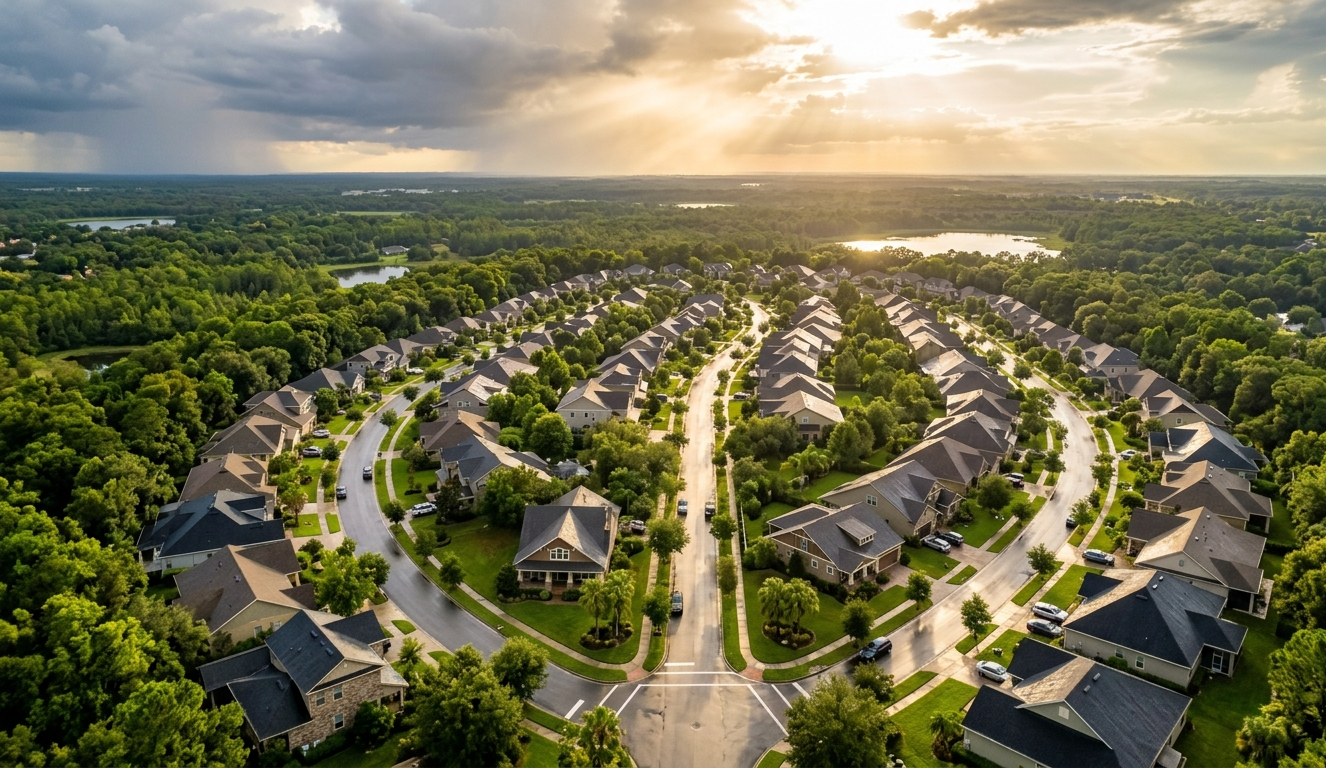
Which Orlando Neighborhoods Have the Highest Elevation and Underground Power Lines?
Insurance renewal notices. Storm season anxiety. The question of whether Florida is even worth the risk anymore. If you’ve thought any of this — even quietly — you’re not alone. It’s become one of the most common conversations I have with buyers relocating from the Northeast, Midwest, and California.
But here’s what those buyers don’t know yet: not all of Central Florida is created equal when it comes to storm risk. There are specific micro-pockets in this region that combine higher elevation, buried utility lines, advanced drainage, and superior construction standards — and they are quietly insulating homeowners from the insurance premium spiral everyone else is experiencing.
“Florida homeowners saw average insurance premiums increase 102% between 2019 and 2024. But in the right zip codes, buyers are locking in lower rates and keeping them — because the property itself is lower risk.”
Why Does Elevation and Infrastructure Actually Matter for Florida Buyers?
Central Florida sits on a porous limestone plateau, which means flood risk, drainage performance, and storm surge vulnerability vary dramatically based on where exactly you are. The distinction between a home in a flood zone AE versus zone X can mean the difference between $4,800/year and $0/year in federal flood insurance premiums.
Underground utilities add another dimension. Aerial power lines are responsible for the majority of extended outages after storms. Communities with 100% buried infrastructure not only restore power faster — their insurance carriers recognize this with lower windstorm premiums. It’s not just comfort; it’s a financial calculation.
What Are Central Florida’s Most Climate-Resilient Areas?
Understanding the region’s geology is the first step. Central Florida sits atop what geologists call the Central Florida Ridge — a spine of higher ground running from Polk County through Lake County into parts of Orange and Seminole. This ridge averages 100–300 feet above sea level, while coastal and low-lying areas average 10–40 feet.
| Area | Avg. Elevation | Buried Utilities | Flood Zone Typical | Risk Rating |
|---|---|---|---|---|
| Clermont / Minneola | ~200–300 ft | Partial–Yes (new developments) | Zone X | Low Risk |
| Mount Dora | ~184 ft | Partial | Zone X | Low Risk |
| Lake Nona (Medical City) | ~60–80 ft | Yes (100% buried) | Zone X | Low Risk |
| Windermere | ~98–110 ft | Partial | Zone X / AE varies | Moderate |
| Winter Park | ~75–95 ft | Partial (downtown buried) | Zone X / AE varies | Moderate |
| Kissimmee | ~65 ft avg | Mostly aerial | AE in many areas | Higher Risk |
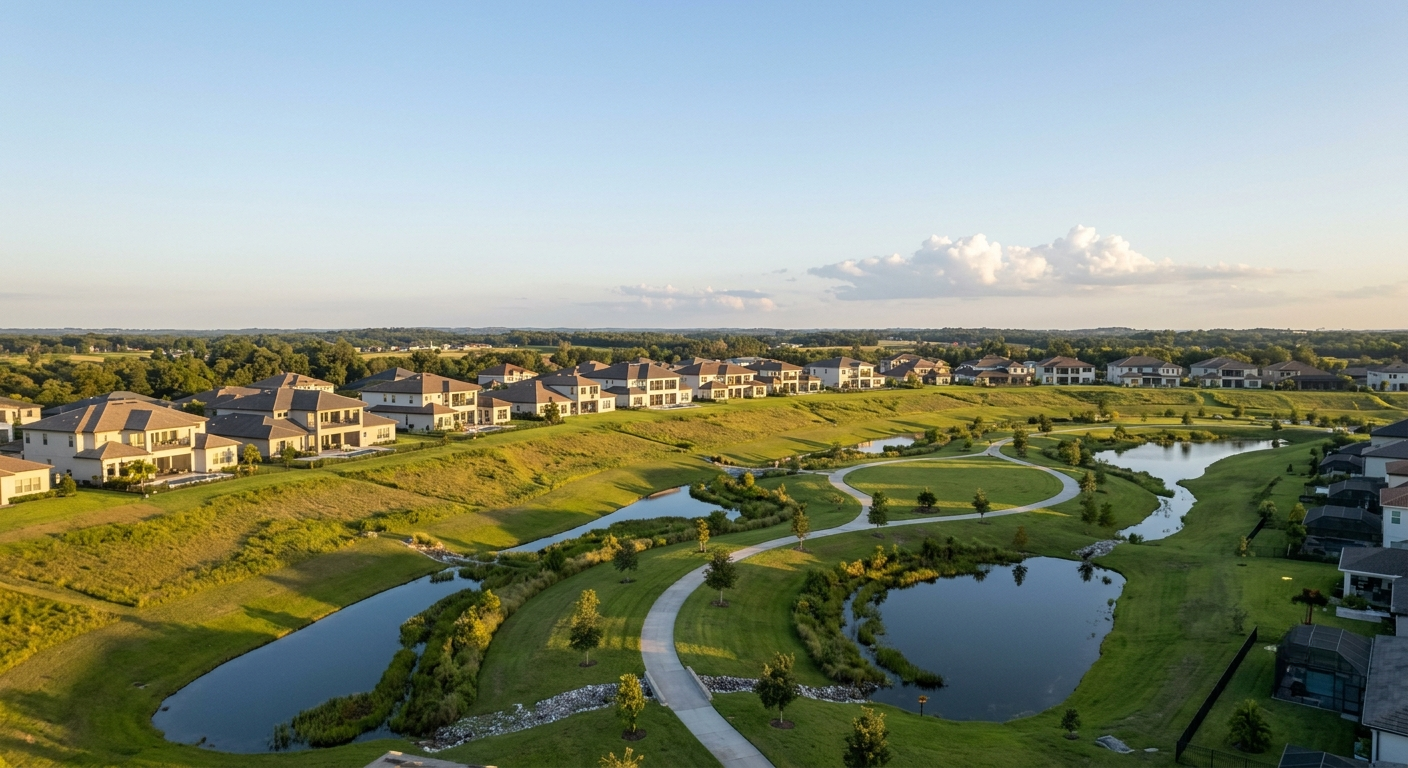
Lake Nona deserves special mention. As a master-planned community built largely post-2005, it was designed with buried utilities as a baseline standard across the entire development — not just in premium streets. Its advanced stormwater management system handles 100-year flood events through a network of retention ponds, greenways, and engineered drainage corridors. It’s not an accident that Lake Nona has become one of the fastest-appreciating zip codes in Florida.
Clermont and Minneola on the Central Ridge offer the natural elevation advantage — homes on the ridge typically sit 200+ feet above sea level, eliminating most flood zone concerns. Combined with newer construction standards and increasingly buried power infrastructure, this area is one of the most overlooked climate-resilient value plays in Central Florida.
How Do You Audit a Home’s “Storm-Proof” Rating Before You Buy?
Here is the exact checklist I walk through with every buyer concerned about climate risk:
🛡️ Home Storm-Resilience Audit Checklist
Check each item — your score appears below.
Check items above to see your property’s resilience score
What Happens to Your Insurance Premiums If You Buy in the Right Area?
Here’s the long-term picture. Florida’s property insurance market has lost several carriers and seen rate increases averaging 15–30% annually in high-risk zip codes. But homeowners in flood zone X, with newer roofs, impact windows, and CBS construction have seen more modest increases — or in some cases, policy stability — because the actuarial data simply supports a lower loss risk profile.
Buyers who buy in Clermont, Minneola, or Lake Nona today aren’t just buying a home. They’re buying an insurance profile that remains competitive when their neighbor’s renewal comes back uninsurable. In a market where some zip codes are approaching $20,000/year in combined homeowner and flood premiums, a $150,000 premium advantage over a 10-year ownership window can equal a full kitchen renovation, a pool, or 60% of a child’s college tuition.
The smart money isn’t just buying in Florida. It’s buying in the right Florida.
Frequently Asked Questions
What is the highest elevation neighborhood in the Orlando metro area?
The Clermont and Minneola area along the Central Florida Ridge averages 200–300+ feet above sea level, making it the highest elevation residential area in the greater Orlando metro. Sugarloaf Mountain in Lake County reaches 312 feet — the highest natural point in peninsular Florida.
Does buying in flood zone X mean I don’t need flood insurance?
Zone X properties are not in a Special Flood Hazard Area, so federal flood insurance is not required by your mortgage lender. However, FEMA notes that 25% of flood claims come from outside high-risk flood zones. Flood insurance on an X-zone property is typically $400–$900/year — many buyers choose to carry it as a relatively inexpensive hedge.
Do underground power lines actually reduce home insurance costs?
Yes, indirectly. Some insurers factor utility infrastructure into windstorm underwriting. More practically, buried utility communities experience fewer and shorter power outages after storms — reducing claims related to food spoilage, pipe damage from extended outages, and generator fires. Some carriers are beginning to explicitly rate for this.
Is Lake Nona really a good choice for storm-conscious buyers?
Lake Nona is one of the most intentionally engineered master-planned communities in Florida from a climate-resilience perspective. 100% buried utilities, advanced stormwater management, mostly Zone X flood classification, and post-2005 construction standards make it a strong choice for buyers prioritizing infrastructure quality. The premium you pay in purchase price is partially offset by insurance and maintenance savings.
How do I check a property’s FEMA flood zone before making an offer?
Use FEMA’s free Flood Map Service Center at msc.fema.gov to look up any address. Enter the property address and it will show you the flood zone designation. I always run this check as part of my standard buyer due diligence review — before my clients ever spend money on inspections.
Want to Know Which Neighborhoods Are Built to Last?
I specialize in helping buyers find properties that protect both lifestyle and financial investment — including how to assess storm resilience before you buy.
Schedule a Buyer Strategy Call