SPRING in Orlando doesn’t just bring theme park crowds and afternoon thunderstorms. It brings buyers off the sidelines.
And March 2026 proved that in a big way.
According to the Orlando Regional REALTOR® Association’s latest State of the Market report, home sales jumped 25% in a single month — from 1,888 closings in February to 2,360 in March. New listings rose nearly 9%. The pipeline of contracts swelled. And prices held firm.
On the surface? Healthy spring momentum. But when you dig into the 18 months of data behind these numbers, a more complicated — and more interesting — picture emerges.
I’ve been selling and financing homes for over 24 years. I’ve seen the spring surge before. What I don’t always see is this combination: buyers returning, rates ticking back up, and sellers sitting on more negotiating power than most people realize. That’s where we are right now.
Let me break down what’s actually happening — and what you should do about it.
🏡 The Spring Surge Is Real, But It’s Not a Frenzy
Sales jumped 25% month-over-month. That’s a headline number. But here’s what makes it meaningful: this is pent-up demand releasing, not a frenzy.
February 2026 had the lowest rate we’ve seen in over a year — 5.88%. Buyers who’d been sitting on the fence all winter watching rates finally had their window. Many of them locked in, went under contract, and closed in March.
Then rates rose back to 6.16% in March. Not catastrophic, but enough to signal: that window narrowed.
What this means:
The buyers who were going to move at sub-6% rates? Many of them already moved.
What’s coming next are buyers who’ve accepted that “perfect rate” isn’t coming — and they’re buying anyway.
New contracts in March were down 4.7% year-over-year, which tells you demand is softer than 2025, even if the month-over-month looks exciting.
The hidden trend: Watch months of supply. We went from 6.34 months in February to 5.09 months in March — a nearly 20% drop in a single month. That means inventory is getting absorbed faster than it’s being replenished. That’s a seller-friendly signal buried in what otherwise looks like a balanced market.
⚠️ The Warning Sellers Aren’t Hearing
If you’re thinking about selling, here’s the number that should be on your radar: new listings are down 11.4% year-over-year.
Fewer sellers are listing. Inventory is sitting at 12,010 homes — virtually flat from February. And despite that, 2,515 new contracts were written in March. The pipeline is active.
So why aren’t sellers jumping in?
Many homeowners are sitting on 3-4% mortgage rates from 2020-2022. Trading that for a 6%+ rate on a new purchase feels painful — even if the equity gains from the last four years are substantial. This “rate lock-in” effect is real, and it’s keeping supply artificially low.
Here’s what that means for sellers who DO list:
Less competition than you think.
Buyers who write contracts in March tend to be serious — not tire-kickers.
Average days on market dropped from 83 in February to 77 in March. Homes are moving faster.
But average price is $488,552 and median is $385,000 — and median is flat to slightly down year-over-year (-0.1%). Pricing correctly still matters.
My advice: If your equity position is strong and your life circumstances call for a move, spring 2026 may be the most seller-favorable window you’ll see before inventory rebuilds. The gap between new listings and buyer demand is closing slowly — but it IS closing.
💼 The Investor Angle: Hidden Opportunity in the Distressed Data
Here’s a data point most market reports skim past: distressed home sales jumped 27.3% in March.
Twenty-eight bank-owned properties and short sales closed last month, up from 22 in February. That’s still only 1.2% of all sales — we are nowhere near a foreclosure crisis. But the upward trend is worth watching.
For investors, this is signal, not alarm.
What I’m seeing:
The condo market is quietly softening. Townhomes and villas grew to 1,608 active listings, and condos sit at 2,286. In some Central Florida corridors, condo sellers are more motivated than single-family sellers.
Months of supply dropped sharply in March — but look at the 12-month trend. We peaked at 7.19 months of supply in January 2026. That’s approaching buyer’s market territory. It compressed quickly, which means the market is reactive — and savvy investors can find the pockets where absorption hasn’t caught up.
For DSCR investors: with a median price holding at $385,000 and rental demand still strong across the I-4 corridor, the rent-to-price ratios on townhomes and smaller SFRs can still support cash flow — especially with a 25-30% down payment.
The opportunity no one’s talking about: The “Back on Market” numbers. In March, 565 properties came back on market after falling out of contract. That’s a significant number. These sellers have already been through the process once, their motivation is higher, and many of them are willing to negotiate. If you have financing ready — especially non-traditional financing like DSCR or non-QM — you can move on these before they get relisted with fresh marketing.
📊 What the Rate Chart Actually Shows (And What to Do About It)
Here’s the 24-month mortgage rate story in plain English:
March 2024: 6.71%
March 2025: 6.55%
February 2026: 5.88% (the dip everyone was hoping for)
March 2026: 6.16% (the snap-back)
Rates dropped over 12% year-over-year through January and February 2026. Then they ticked back up in March. This is the pattern we’ve been living in — not a straight line down, but a slow, volatile descent.
What this means for buyers:
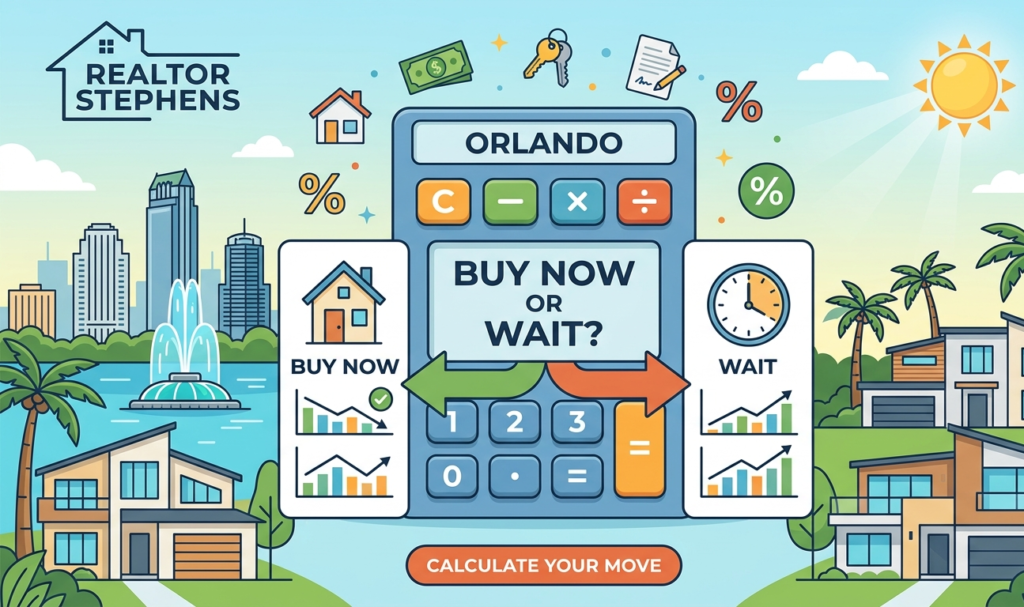
Stop waiting for 5%. It might come. It might not. But here’s what I’ve learned from working through 2008 and the recovery years: people who bought when rates felt uncomfortable and then refinanced when rates dropped built more wealth than people who kept renting and waiting.
You buy the home. You date the rate.
The math that matters right now: on a $385,000 purchase with 10% down, the difference between a 6.16% and a 5.5% rate is roughly $175/month. That’s real money. But if prices rise another 3-5% while you wait (which is what median prices have done year-over-year), you’ve lost more than you saved.
If you’re a first-time buyer: FHA loans, down payment assistance programs, and rate buydowns are all tools on the table. We can structure your loan to get you in now and positioned to refinance later.
If you’re a foreign national or ITIN holder: Rates and terms are different for non-QM products, but the same principle applies — waiting for the “perfect” conventional market may mean waiting indefinitely. There are paths into this market designed specifically for you.
❓ Frequently Asked Questions: Orlando Real Estate Market, March 2026
Q: Is Orlando a buyer’s market or seller’s market in 2026? A: As of March 2026, Orlando is trending toward a balanced-to-seller-favorable market. With 5.09 months of supply (down from 6.34 in February), inventory is tightening faster than new listings are coming in. Sellers have more leverage than headline numbers suggest, but buyers still have more options than they did in 2021-2022.
Q: What is the median home price in Orlando right now? A: The median home price in the Orlando area was $385,000 in March 2026, according to the Orlando Regional REALTOR® Association. This is essentially flat year-over-year (-0.1% from March 2025’s $385,500) and up 2.7% from February 2026’s $375,000.
Q: Are home prices dropping in Orlando? A: Not significantly. Median prices are essentially flat year-over-year (-0.1%). Average prices actually rose slightly (+0.6% year-over-year to $488,552). The market is not in free fall — but price appreciation has slowed considerably from the 10-20% annual gains of 2021-2022.
Q: How long does it take to sell a home in Orlando in 2026? A: Average days on market in March 2026 was 77 days, down from 83 in February. Average days to sale (from listing to close) was 113 days. Homes that are priced correctly are selling faster — overpriced homes are sitting and often coming back on market.
Q: What are mortgage rates in Orlando in 2026? A: The average mortgage rate paid by Central Florida buyers in March 2026 was 6.16%, up from 5.88% in February. This is still down 5.9% from March 2025’s 6.55%, meaning buyers today are paying less than they would have a year ago, even with the recent uptick.
Q: Is now a good time to buy a home in Orlando? A: For buyers who are financially ready, spring 2026 offers more inventory and more negotiating room than the past few years — without the extreme competition of 2021-2022. Rates have room to improve, and buying now allows you to build equity and refinance if rates drop. Waiting always carries the risk of rising prices offsetting any rate savings.
Q: Can I buy a home in Orlando without a Social Security number? A: Yes. ITIN mortgage loans are available for non-citizen buyers who have an Individual Taxpayer Identification Number. As a licensed mortgage broker, I work with lenders who specifically underwrite ITIN loans for Central Florida buyers.
Q: Is it a good time to invest in Orlando real estate in 2026? A: The fundamentals remain strong: population growth, tourism, corporate relocation, and a strong rental demand along the I-4 corridor. DSCR loans (which qualify on rental income, not personal tax returns) make investor financing more accessible. Condo and townhome segments are showing softness that could represent opportunity for buyers who move quickly.
🤝 Ready to Make Your Move?
Whether you’re buying, selling, or investing in Central Florida real estate, you deserve an advisor who knows the market AND can handle your financing in-house — without the hand-off delays or communication gaps.
That’s exactly what I offer. One agent. One lender. Your whole team.
I’ll pull the current data for your specific neighborhood or price point, walk you through what you actually qualify for, and give you a plan that makes sense for your situation — not a generic one-size-fits-all answer.
Stacy Ann Stephens | REALTOR®Keller Williams Realty Winter Park147 W Lyman Ave, Winter Park FL 32789📞 407-603-1664
Market data sourced from the Orlando Regional REALTOR® Association State of the Market Report, March 2026. Statistics represent residential listings (single-family, townhomes, condos, duplexes) taken or sold by ORRA brokers. Does not include vacant land or commercial transactions.