
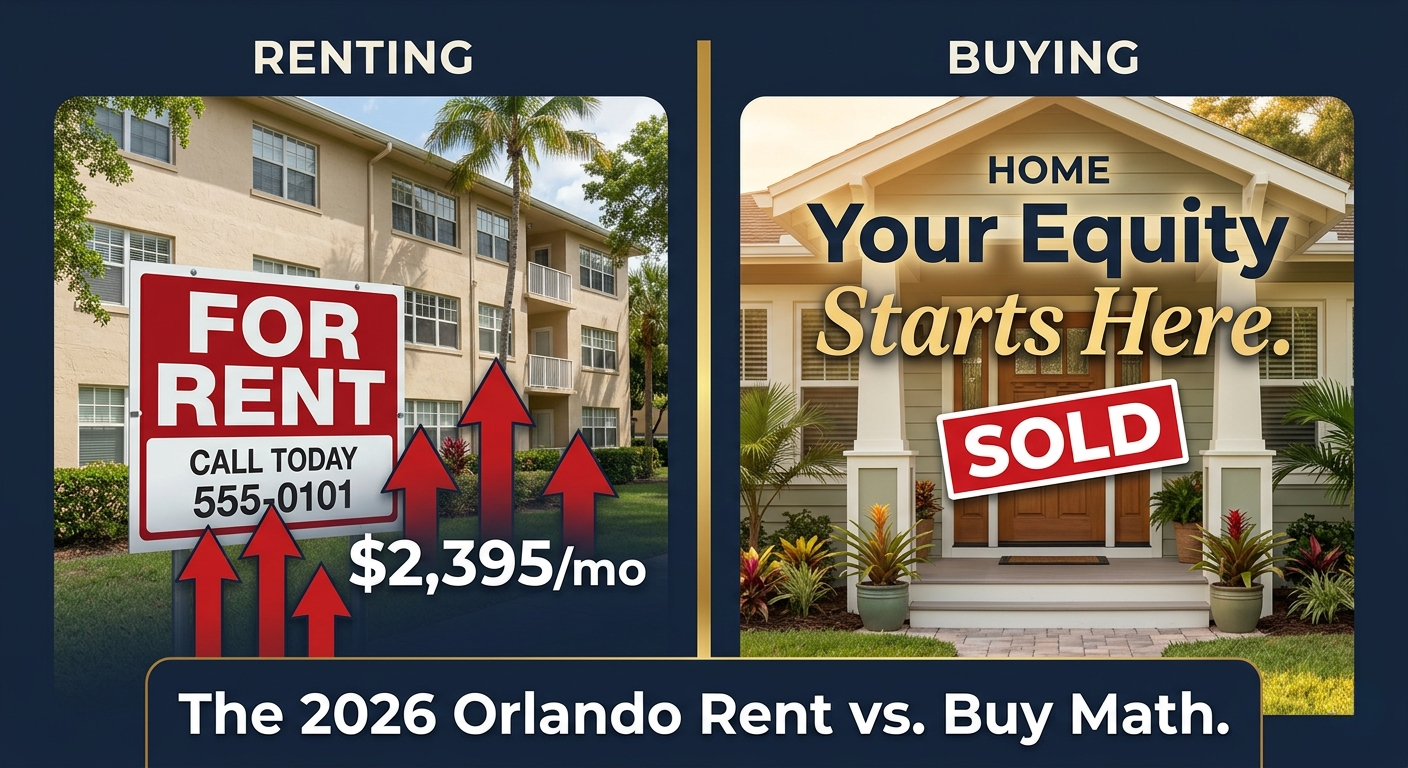
Orlando Housing Market Analysis · 2026
The 2026 Orlando Rent vs. Buy Math: Why High Rents and Seller Concessions Just Changed the Calculus
Forget the generic advice. Here are the actual numbers — and why buyers willing to negotiate have more leverage than they’ve had in years.
The question I get most often right now is some version of: “Is it even worth buying with these interest rates?” And I understand why. When rates are at the level they’ve been, the math on paper can look uncomfortable — until you factor in what Orlando rents are doing, what sellers are now willing to concede, and how much negotiating power buyers have quietly accumulated over the past 18 months.
Let me show you the actual math. Not the optimistic version. The real version — and then you can decide.
Is It Cheaper to Rent or Buy a House in Orlando Right Now?
The honest answer is: it depends on your down payment, your rate, and whether you negotiate seller concessions. Let me break this down the way I would for a client sitting across from me.
The rent scenario: The average single-family home rental in the Orlando metro is running approximately $2,395/month as of mid-2026. That buys you a place to live, zero equity, and a landlord who can raise your rent at lease renewal — and in Florida’s current market, they likely will. There’s no wealth-building here. Every dollar goes out the door.
The buy scenario: On a $407,000 home purchase with 5% down and a competitive interest rate, your principal and interest payment sits in the $2,500–$2,700/month range before taxes and insurance. That gap narrows considerably once you factor in the mortgage interest deduction, principal paydown (equity), and appreciation over time.
But here’s what changes the calculation dramatically: seller concessions.
The Secret Weapon — How to Use Seller Concessions to Defeat High Interest Rates
In the current Orlando market, homes are sitting an average of 58–71 days before selling. That’s not a market on fire. That’s a market where sellers need buyers — and where experienced buyers’ agents (like me) are routinely negotiating thousands of dollars in concessions that most buyers don’t even know to ask for.
What Are Seller Concessions and How Do They Work?
A seller concession is money the seller contributes at closing toward your costs — most commonly used to buy down your mortgage interest rate or cover closing costs. In Florida, conventional loans allow up to 3–9% in seller contributions depending on your down payment. FHA allows up to 6%.
The most powerful use of seller concessions right now is a 2-1 temporary rate buydown. Here’s how it works:
- Seller contributes ~$8,000–$12,000 at closing (often negotiated off the purchase price)
- Your interest rate is reduced by 2% in year 1 and 1% in year 2
- By year 3, you’re at your note rate — but you’ve had two years of lower payments to build reserves and potentially refinance
Year 1 payment (at 5.25%): ~$2,105/mo P&I
Year 2 payment (at 6.25%): ~$2,337/mo P&I
Year 3+ payment (at 7.25%): ~$2,578/mo P&I
Meanwhile: that landlord raising your rent annually is likely at $2,600+ by year 3 anyway.
A permanent rate buydown (paying points upfront) is also on the table. Each point costs 1% of the loan amount and typically reduces the rate by 0.25%. On a $385,000 loan, one point = $3,850 to save ~$88/month. Your break-even is about 44 months — less than 4 years. If you’re staying in the home, this is almost always worth it.
🏡 Orlando Rent vs. Buy Calculator
Compare your true monthly cost of renting vs. buying — including estimated equity building. For a personalized analysis including seller concessions, call me directly.
Est. monthly rent (year 1)
Total paid to landlord
Est. P&I payment (monthly)
Appreciation + principal paydown
*Estimates only. Does not include taxes, insurance, HOA, maintenance, or tax benefits. Consult with Stacy for a full personalized analysis.
The 58-Day Window — Why Buyers Have More Leverage Than They Realize
In 2021 and 2022, homes in Orlando were going under contract in 5–10 days. Buyers waived inspections. Sellers received ten offers on day one. That market is gone. What we have now is a more balanced market where strategy matters.
At 58–71 days on market, sellers have already had the uncomfortable conversation with their agents about price expectations. They’ve watched other buyers look and walk away. They’re ready to deal — if you ask the right way, at the right time, through the right agent.
What I’m regularly negotiating for buyers right now:
- $5,000–$15,000 in closing cost credits applied toward rate buydowns
- Home warranty inclusions (1-year, paid by seller)
- Post-closing occupancy agreements that give buyers time to coordinate moves
- Price reductions — especially on homes that have already had one reduction