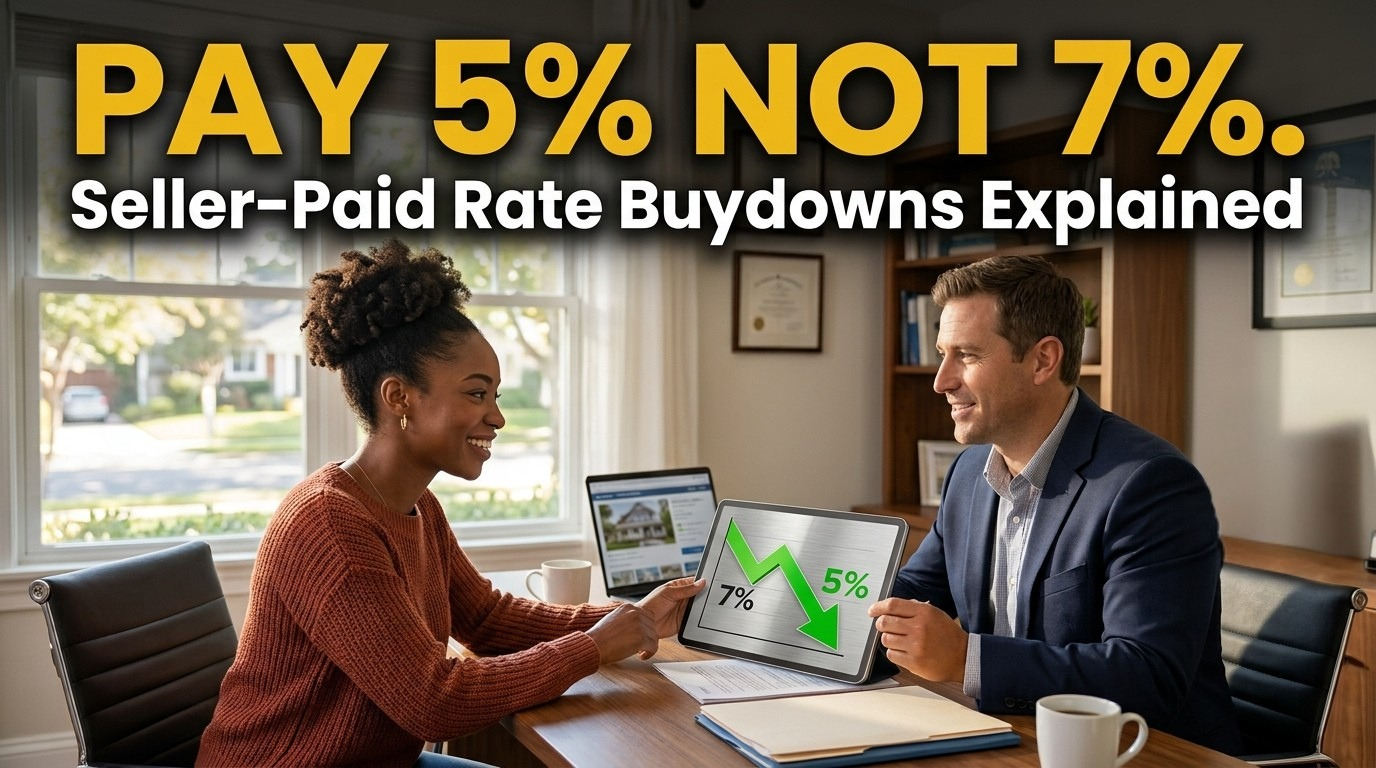
What Is a Mortgage Rate Buydown? How Florida Buyers Are Lowering Their Payments Right Now
Builders have used this strategy for two years to sell homes. Now resale buyers are catching on — and getting sellers to pay for it. Here’s everything you need to know about rate buydowns in Florida.
When mortgage rates shot past 7%, a lot of buyers froze. And honestly? That’s understandable. A $400,000 home at 7% is a very different monthly payment than that same home at 5%. The math is unforgiving.
But here’s what Florida’s biggest homebuilders figured out quickly: you don’t have to accept the market rate as final. They started funding rate buydowns on behalf of buyers — paying to temporarily or permanently lower the interest rate — to keep sales moving. It worked. New construction kept selling while resale sat.
Now, resale buyers are using the same playbook. And in many cases, they’re getting sellers to fund it.
Two Types of Rate Buydowns: Temporary vs. Permanent
Most Popular Right Now
Temporary Buydown (2-1 or 1-0)
Reduces your rate for the first 1–2 years only, then returns to the original rate. The subsidy is funded upfront — typically by the seller. Best for buyers who expect to refinance when rates drop.
Permanent
Discount Points (Permanent Buydown)
Each point equals 1% of the loan amount and typically reduces your rate by 0.20–0.25% for the life of the loan. Best for buyers who plan to hold the mortgage long-term and won’t refinance for years.
Hybrid
3-2-1 Buydown
Reduces the rate by 3% in year one, 2% in year two, 1% in year three, then full rate for the remainder. Less common now but available for larger seller concessions on higher-priced properties.
How a 2-1 Buydown Works in Real Life
Let’s make this concrete. Say you’re buying a $400,000 home with a $360,000 loan at 7%.
Total seller-funded subsidy (cost of the 2-1 buydown on this loan): approximately $9,972
The strategy: In year one, you save $463/month. In year two, $237/month. By year three, most buyers who purchased in 2024–2026 are hoping to refinance into a lower permanent rate as the Fed continues its easing cycle. The buydown buys you time — at the seller’s expense.
2-1 Buydown Cost Calculator
Rate Buydown Estimator
Calculate the cost of a 2-1 buydown and how much you’d save each month during the buydown period.
Full rate payment (Year 3+)—
Year 1 payment (rate – 2%)—
Year 2 payment (rate – 1%)—
Month 1 savings—
Estimated total buydown cost (seller concession needed)
—
When to Use a Temporary Buydown vs. Permanent Discount Points
The right tool depends on how long you plan to hold the mortgage — and what you think rates will do.
Use a temporary 2-1 buydown if: You expect to refinance within 2–4 years. Rates have been elevated since 2022 and most economists expect them to ease. A buydown lowers your payment now while you wait for a refinance opportunity. The seller pays; you benefit regardless of what rates do.
Use permanent discount points if: You plan to stay in the home and keep the loan for 7+ years, you want a guaranteed long-term payment reduction, and you don't expect to refinance anytime soon. The "break-even" on one point is typically 4–6 years — meaning you need to keep the loan that long to recoup the cost.
Frequently Asked Questions About Rate Buydowns in Florida
What is a mortgage rate buydown in Florida? +
A rate buydown is when an upfront payment is made at closing to reduce your mortgage interest rate — either temporarily (first 1–3 years) or permanently (for the full loan term). In Florida right now, sellers are frequently asked to fund the buydown as a concession.
What is a 2-1 buydown on a mortgage? +
A 2-1 buydown temporarily reduces your rate by 2% in year one and 1% in year two, then returns to the full rate in year three. On a 7% loan, you pay 5% in year one, 6% in year two, and 7% from year three on. The payment difference is funded upfront — typically by the seller.
Who pays for a rate buydown in Florida? +
The seller, builder, or buyer can pay for a buydown. Today's market conditions often support asking the seller to fund it as part of their closing cost concession. Builders have been doing this routinely since 2022. Resale sellers are increasingly agreeable when their home has been sitting on the market.
How much does a 2-1 buydown cost? +
It equals the total payment subsidy for the two buydown years. On a $360,000 loan at 7%, a 2-1 buydown costs approximately $9,000–$12,000. Use the calculator above for your exact scenario.
Is a 2-1 buydown or permanent points better? +
A 2-1 buydown is better if you plan to refinance within a few years. Permanent points are better if you'll hold the loan for 7+ years. Ask your agent and lender to run both scenarios side by side for your specific situation — it's not a one-size-fits-all answer.
Can I use a rate buydown with an FHA or VA loan in Florida? +
Yes. Both temporary and permanent buydowns are allowed on FHA, VA, USDA, and conventional loans in Florida. Each loan type has a maximum seller concession limit — FHA allows 6%, VA allows 4% plus actual costs, and conventional ranges from 3–9% based on down payment.
What happens to my buydown funds if I refinance early? +
The unused portion of a temporary buydown is typically credited toward your loan payoff when you refinance. This is actually part of the strategy — use the lower payments now, refinance into a lower permanent rate when the market gives you the opportunity.
Let's Run the Numbers on Your Buydown
Before you make an offer, I'll show you exactly what a seller-funded buydown could look like on any home you're considering — and help you negotiate it into the contract.