
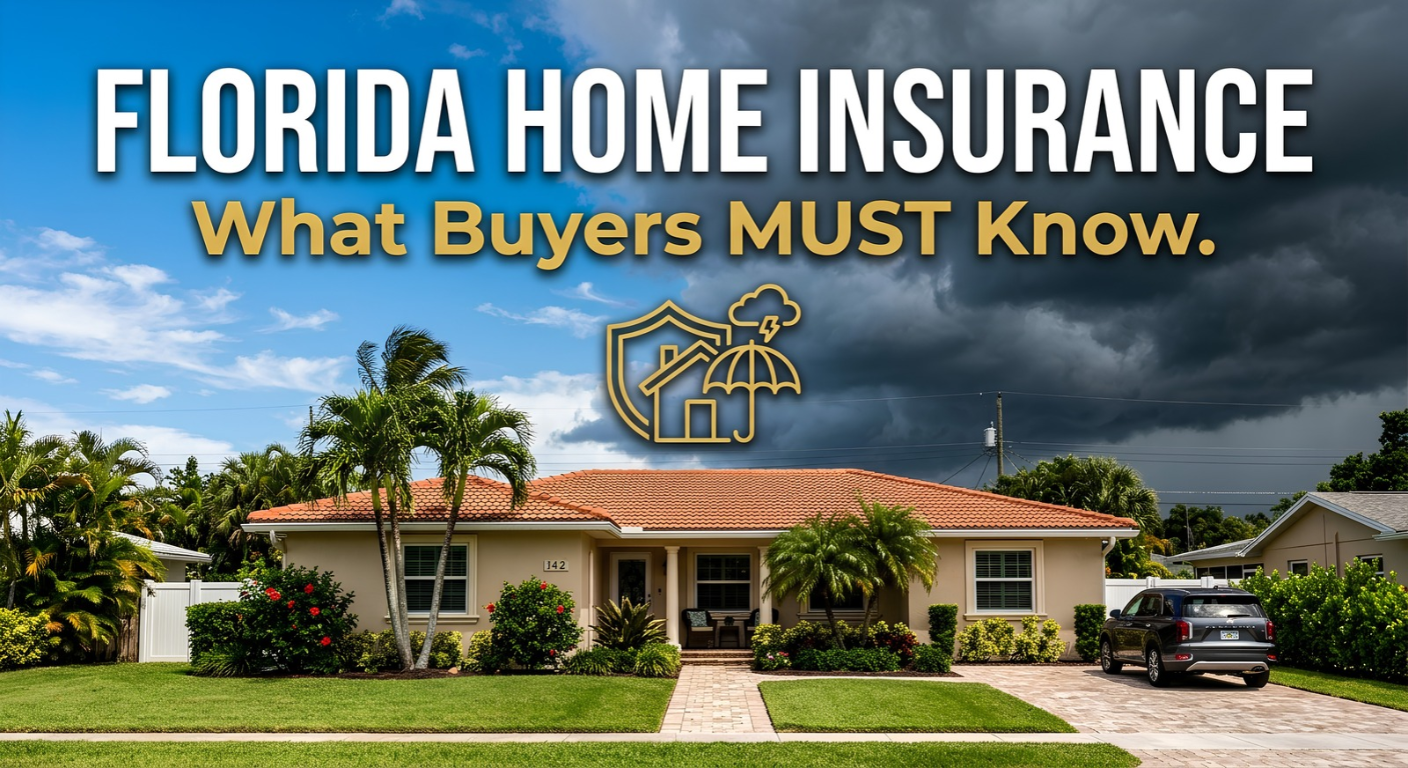
Florida Homeowners Insurance for Buyers: What Nobody Tells You Before You Close
Your mortgage pre-approval is in hand, you’ve found the house, and the offer was accepted. Then your insurance agent calls with a number that stops the whole deal. It happens more than you think — and it’s almost always preventable.
Florida is the most expensive state in the country for homeowners insurance — and that gap keeps widening. What buyers often don’t realize is that insurance isn’t just a monthly budget line. In Florida, it can determine whether a deal closes at all.
I’ve been in real estate for over 24 years in Central Florida, and I can tell you: insurance surprises in the final stretch are one of the most common reasons deals fall apart or budgets blow up. This guide is everything I wish every buyer knew on day one.
The most common mistake Florida buyers make: Waiting until the week before closing to shop for homeowners insurance. By then, if the home has an aging roof, a prior claim, or a serious flood zone designation, you may have very little leverage — and very little time to adjust your offer or walk away cleanly.
Why Florida Homeowners Insurance Is So Expensive — and So Complicated
Florida sits in the crosshairs of Atlantic hurricane season, subtropical weather, and a geography that makes it uniquely difficult for insurance actuaries to price risk. On top of that, a wave of insurer insolvencies and market exits between 2022 and 2024 reduced private market competition dramatically, pushing premiums higher and availability lower.
Here’s what’s driving your premium in Florida:
🌀 Hurricane and Wind Risk
Wind-related damage is the dominant driver of Florida insurance costs. Your roof design, materials, age, and how it attaches to the structure all factor into your wind premium — which is why a wind mitigation inspection can save thousands per year.
🌊 Flood Zone Designation
Flood insurance is separate from your homeowners policy. FEMA flood zone designation (check the FEMA Flood Map Service Center) determines whether flood coverage is required by your lender and what it will cost. Zone AE and VE properties carry the highest requirements.
🏠 Roof Age and Condition
Most Florida insurers decline new policies on homes with roofs older than 15 to 20 years. This is one of the most common insurance deal-killers — especially on older resale homes in Central Florida. Always ask for the roof age upfront.
📋 Prior Claims History
Insurers review a property’s CLUE report (Comprehensive Loss Underwriting Exchange) — a history of prior claims on the address. Multiple prior claims, water damage claims, or roof claims can make a property expensive or impossible to insure privately.
The Wind Mitigation Inspection: Florida’s Best-Kept Insurance Secret
If you buy a home in Florida and don’t get a wind mitigation inspection, you are almost certainly overpaying for your insurance. Here’s how it works — and why it matters so much.
A licensed inspector evaluates specific features of your home that reduce hurricane damage risk:
- Roof shape — Hip roofs (sloped on all four sides) get the best credits
- Roof deck attachment — How the plywood is nailed to the frame; 8d nails in a 6-inch pattern is optimal
- Roof-to-wall connection — Hurricane clips or straps earn significant credits
- Roof covering — FBC-rated (Florida Building Code) shingles or metal earn credits
- Opening protection — Impact windows, storm shutters, or rated garage doors reduce windstorm premiums substantially
The Insurance Due Diligence Checklist — Before You Make an Offer
Use this checklist during your home search — not after you’re under contract. Check items off as you confirm them.
- Ask for the roof age and documentation — Get the year of the last full replacement in writing from the seller. Anything over 12 years, flag immediately.
- Request a CLUE report on the property — Your insurance agent can pull this. Reveals all prior insurance claims on the address for the past 7 years.
- Check the FEMA flood map — Go to msc.fema.gov and search the address. Know the flood zone designation before you make an offer, not after.
- Get an insurance quote within 3 days of going under contract — Do not wait until the final week. Treat the quote like a required inspection.
- Order a wind mitigation inspection — Schedule alongside your general home inspection. Results can dramatically reduce your premium quote.
- Ask about 4-Point inspection requirements — Most Florida insurers require a 4-Point inspection on homes over 20 to 25 years old. It covers roof, electrical, plumbing, and HVAC. If any component fails, coverage may be denied or rated higher.
- Compare at least 3 insurance quotes — Include at least one private market carrier and Citizens Insurance. Premiums can vary by $800 to $2,000+ annually for the same coverage.
- Confirm flood insurance is separate — and budget for it — Standard homeowners insurance does NOT cover floods. If the property is in a special flood hazard area, lenders require a separate flood policy. Budget $800 to $2,500+ per year.
Estimate Your Florida Home Insurance Cost
This estimator gives you a realistic annual range to plan for — based on home value, location risk, and roof age. Real quotes will vary, but this gets you in the right ballpark before you start home shopping.
Florida Insurance Cost Estimator
Get a realistic annual insurance range based on your home’s key factors.
This is an estimate for planning purposes only. Actual quotes depend on your specific property, insurer, coverage levels, and current market conditions. Always get multiple quotes from licensed Florida insurers.
Frequently Asked Questions About Florida Home Insurance
Don't Let Insurance Be the Surprise That Kills Your Deal
I work with buyers every day in Central Florida and I make sure insurance due diligence is part of the process from day one — not something we scramble to fix the week before closing.